 OwnTime
ADHD Task Switching: 6 Founder-Friendly Transition Scripts
Switching tasks has a cost you can design around
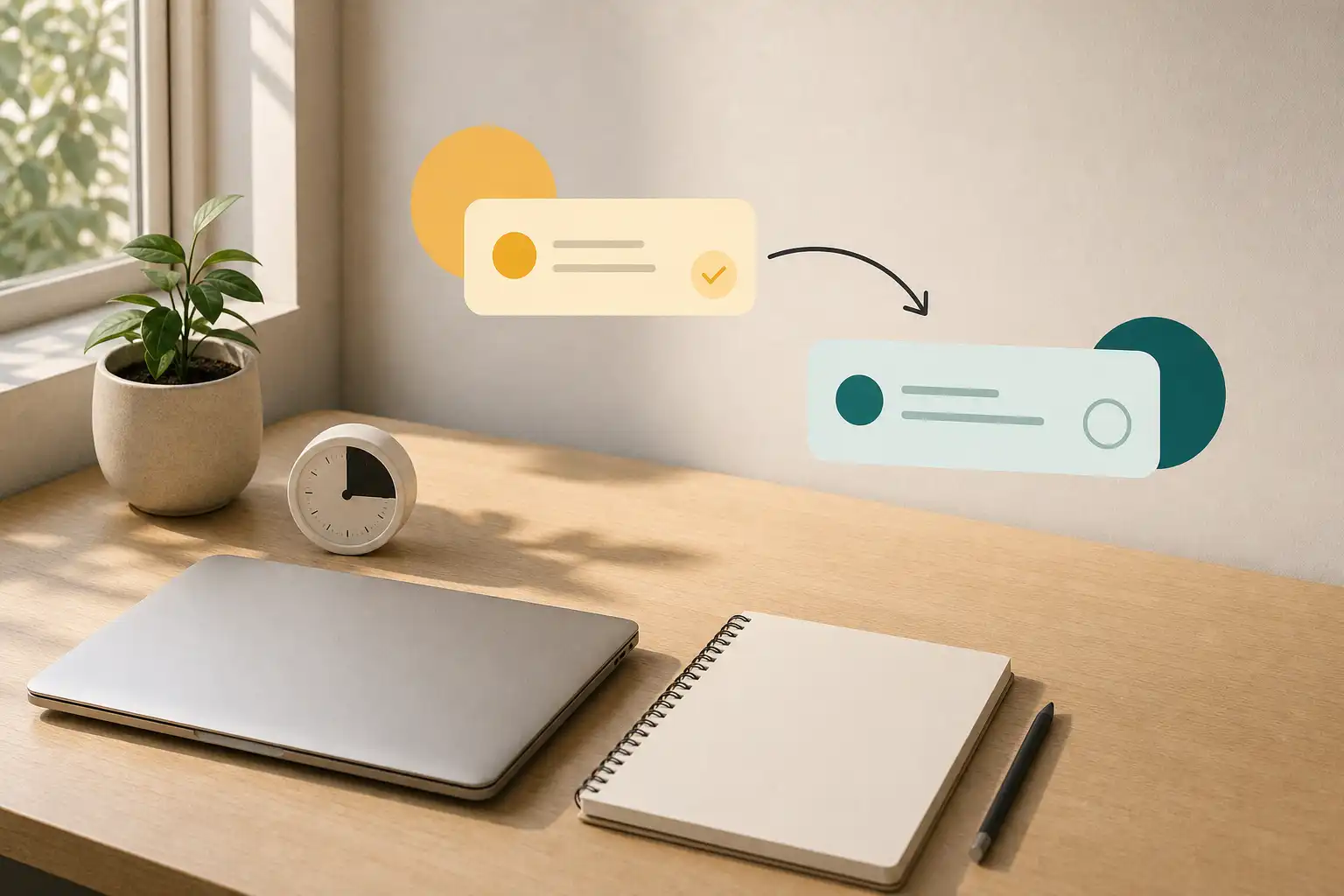
A founder can spend an hour locked into a proposal, then lose the next 40 minutes trying to begin a two-minute invoice task because the handoff has no landing pad. That gap is expensive.
For many adults with ADHD, the issue is rarely knowing a task matters. The harder work is initiating it, keeping the next step in mind, resisting a more interesting detour, and returning after an interruption; focus can be intense, while directing it takes effort.
Self-directed work makes this especially visible. No one is at your desk to hand you cleanly from a sales call to strategy work to admin, and the freedom to choose creates more transitions to manage.
Executive function is the constraint, not ambition
Executive function covers the practical skills behind planning, shifting attention, holding a goal in mind, organizing information, and pausing an unhelpful impulse. Those skills fluctuate, sometimes sharply, across a day.
A meta-analytic review of adult ADHD found group differences across several executive-function measures, including inhibition and set shifting. It also found meaningful variation between people and across measurement methods, so ADHD is not one uniform work style.
The work consequences are real without being a moral verdict. In a field study of 171 employees, difficulty with time self-management and self-organization/problem-solving helped explain the relationship between ADHD and burnout symptoms, which puts workflow and environment squarely on the operating plan alongside individual effort. Read the study
The position here is clear: advice to “just be more disciplined” is productivity theater. Make the next transition cheaper instead.
A transition script needs three things
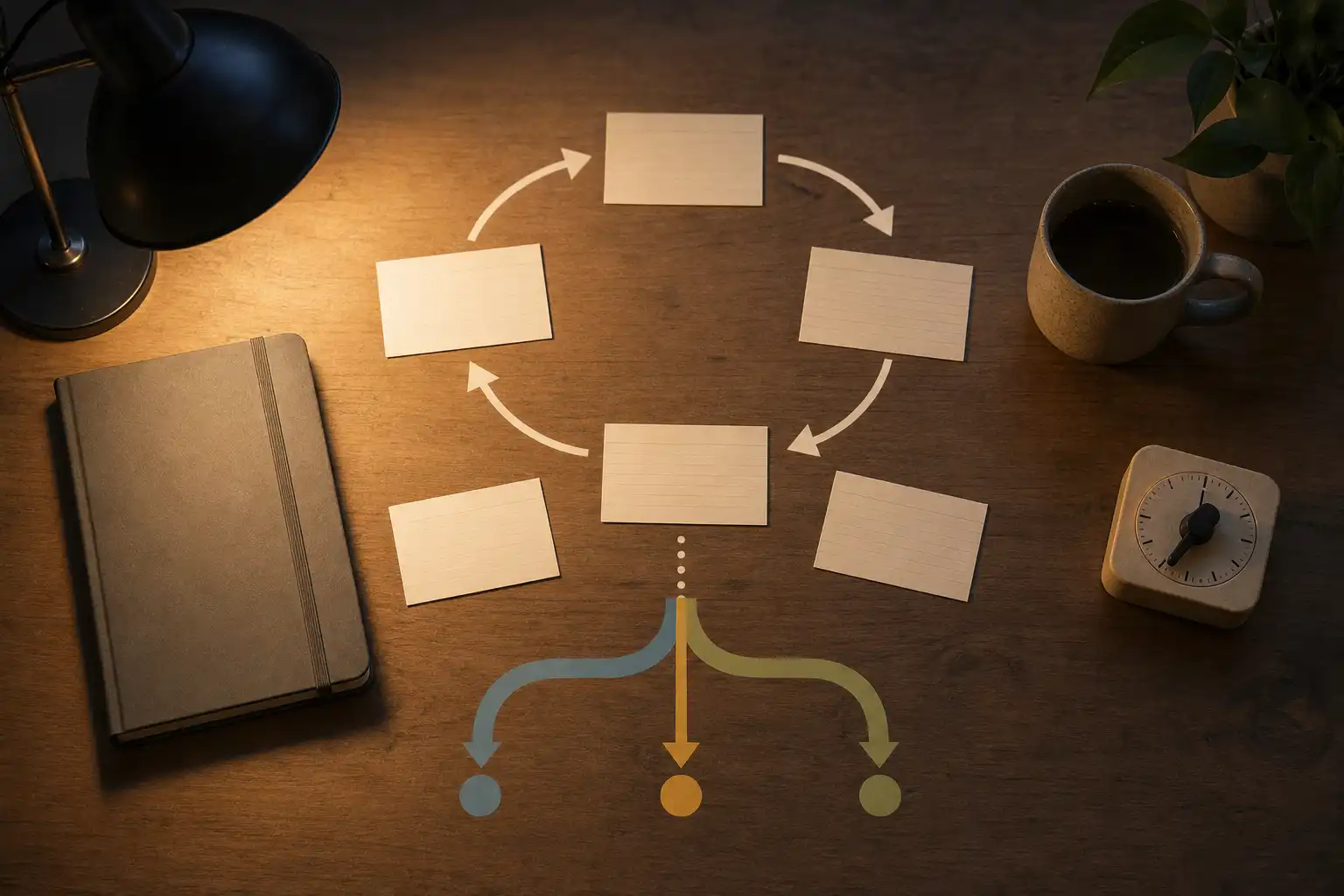
A transition script is a short sequence for the boundary between two types of work, especially the moment a brain is most likely to drift, freeze, or chase novelty. It should take seconds or a few minutes, not turn every hour into a ceremony.
Use a script that is:
- Visible. It should work without remembering a complicated process.
- Small. The routine cannot consume the break between tasks.
- Physical. It names a concrete next action, such as “open the campaign draft and write three headline options.”
“Work on marketing” is a category. “Write three headline options” is an arrival point.
1. Leave a one-line runway before stopping
Before closing a document or ending a work block, write one sentence answering: What will I do first when I return? That sentence saves the future version of you from rebuilding the entire task context.
Keep it concrete:
- “Compare the two pricing options in the client email.”
- “Draft the first paragraph under the results heading.”
- “Open the bank feed and categorize the three flagged transactions.”
Write the runway even when a meeting interrupts you rather than when the task is finished. A clean exit makes re-entry much less dramatic.
2. Create an arrival action, not a category
Labels such as “operations,” “content,” and “client work” still leave a decision waiting at the moment you try to start. That open decision gives avoidance an easy route in.
Format the task as verb + object + location. Short wins here.
- Send the revised scope from the draft folder.
- Review the three notes in the discovery document.
- Add receipts to the expense folder.
This does not require breaking every project into tiny pieces forever. It makes the first move obvious when you need to change gears.
3. Use a closing timer for deep work
Deep work often breaks down at the ending: stopping can feel like abandoning momentum, while missing the next commitment creates an even bigger mess. Set a timer for five to 10 minutes before the actual endpoint, then treat it as part of the block.
Use that final window to save your work, write a runway sentence, and choose the next destination. You are building a bridge between tasks rather than yanking attention away from one.
For a fuller end-of-day version of this handoff, use an ADHD-friendly remote-work shutdown ritual.
4. Park distractions somewhere outside your brain
Unrelated ideas can arrive mid-task with fire-alarm urgency: check a competitor, message a collaborator, buy printer ink, redesign the website. Capture each one in a single trusted parking place, then return to the work already open.
The note needs only enough detail to be useful later. “Ask Sam about webinar date” beats carrying that reminder in working memory during a financial review.
A paper pad, pinned note, or quick-capture inbox can work. The rule is tighter than the tool: capturing an idea cannot become 25 minutes of research.
5. Put a friction gate before reactive work
Email, chat, notifications, and spare browser tabs offer instant clarity and reward. Strategic work often starts with ambiguity, so reactive work becomes the default landing zone unless you block that path on purpose.
Before opening email or chat, ask: Is this the task I intended to arrive at? If the answer is no, open the intended file first.
This does not mean ignoring clients or teammates. It prevents every completed task from becoming an automatic invitation to fragment attention.
6. Restart with a five-minute commitment
After a call, lunch, school pickup, or an unusually hard morning, recreating a perfect focus state can make restarting feel impossible. Commit to five minutes of setup and one first action instead.
Open the runway note, remove one obvious obstacle, and begin the smallest useful action. Momentum can arrive late.
If five minutes is all you have, the work still moved forward and tomorrow has a cleaner starting point. That counts because restarting is a skill, not a personality trait.
What this looks like in a founder’s day
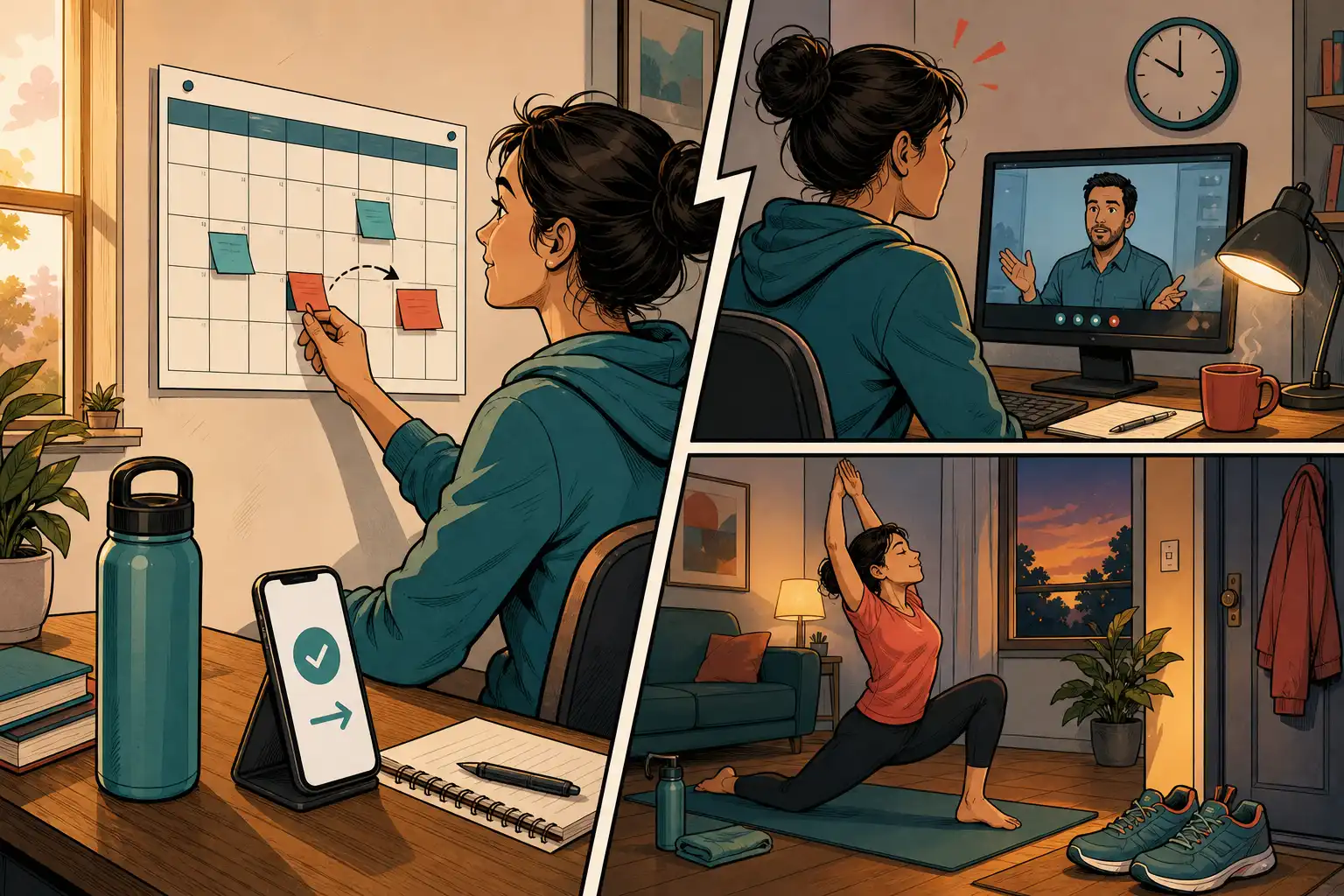
Maya, a freelance designer, finishes a client revision 15 minutes before a bookkeeping block she has postponed twice. Switching from visual design to finances feels heavy, and scrolling for a minute is the obvious escape hatch.
Instead, she writes: “Next: export final mobile screens and send approval link.” Then she opens her bookkeeping tool and commits to categorizing three transactions.
The tradeoff is deliberate: Maya does not clear her inbox before finance work. She also does not lose the afternoon to it.
A transition script will not make every handoff smooth. It gives the next task a fair shot before novelty wins by default.
Install one script before adding another
Running all six scripts on Monday morning is how useful advice becomes another abandoned system. Pick the transition causing the most damage this week and install one response.
| If this is happening | Start with this script |
|---|---|
| You cannot restart an important project after meetings | Leave a one-line runway |
| Your task list feels too vague to begin | Create an arrival action |
| You overrun focused work and miss the next commitment | Use a closing timer |
| Every thought pulls you into a new tab | Park distractions externally |
| You keep falling into email between meaningful tasks | Add a friction gate |
| You lose traction after interruptions | Make a five-minute restart commitment |
Run the chosen script for seven days, then adjust the wording until it works on a tired day. That is the only test that matters.
A small randomized trial of a self-tailored metacognitive telehealth intervention for adults with ADHD found improvements in work performance, executive function, and quality of life that remained at follow-up. The takeaway from the Work-MAP trial is practical: personalized support deserves serious consideration, because one magic protocol is unlikely to fit every working life.
If ADHD-related challenges are significantly affecting work, relationships, or wellbeing, a qualified clinician can help explore assessment and treatment options alongside workflow changes. Support is a useful part of the plan.
Let OwnTime carry part of the transition load
A task system should do more than store every possible future task. On a busy Tuesday, it should reduce the question: “What am I supposed to do now?”
Use a setup that can hold quick captures, separate firm commitments from flexible work, and surface a realistic next action based on available time and context. OwnTime can help here by recommending relevant tasks instead of forcing you to sort a growing backlog when you are already tired.
Keep the tool in a supporting role. Business priorities still belong to you, while the system helps make the next move easier to see.
Give the next task a place to land
Start with the boundary already causing trouble: the post-meeting restart, the pull toward email, or the vague task that keeps sliding to tomorrow. Put one script where you will see it, then use it at the next handoff.
That is a small operational change with a direct payoff: less time spent trying to begin.
Related articles