 OwnTime
Sleep and Energy With ADHD: A Practical Evidence Check
Sleep is an energy problem, not a character problem
Low energy makes routine decisions feel expensive, especially when attention is already busy filtering distractions, switching gears, holding onto priorities, and recovering after interruptions. That strain is real.
More alarms, stricter schedules, and a heroic catch-up plan often add pressure when the hard part is making a workable choice while tired. Sleep is infrastructure.
Sleep is neither a moral achievement nor a productivity contest, although a steadier sleep pattern can make ordinary work feel far less uphill. Treating exhaustion as a discipline failure usually sends people chasing their tails.
What ADHD sleep research can and cannot tell you
Adults with ADHD report sleep difficulties more often than the general population, yet that broad finding includes several distinct patterns. The patterns differ.
A systematic review of 62 studies involving 4,462 people with ADHD found consistent evidence of greater eveningness, later sleep onset, and delayed circadian markers, which reflect the body’s internal timing system. These findings show association, not destiny.
For some people with ADHD, alertness arrives late and an early bedtime feels unusually difficult even when they want one. That differs from bedtime procrastination.
The evidence also does not say that more sleep will fix every attention problem, or that every late sleeper has a delayed body clock. It cannot.
The useful response depends on the pattern, because someone who gets enough sleep but wakes at an awkward time needs a different plan from someone losing sleep to late work, doomscrolling, room noise, anxiety, medication timing, or sleep apnea. One-size-fits-all bedtime advice misses that distinction.
Find the pattern before changing everything
Before changing five habits at once, run a simple 14-day observation period that looks for trends without demanding perfect records. Keep it boring.
Each morning, add the following to a note, spreadsheet, or tracker.
| Track | What to record | Why it helps |
|---|---|---|
| Sleep window | Approximate time you tried to sleep and woke up | Shows whether you had enough opportunity for sleep |
| Sleep quality | A quick 1–5 rating | Separates time in bed from restorative sleep |
| Morning energy | A 1–5 rating at roughly the same time each day | Connects sleep patterns to the day you need to manage |
| Caffeine | Time of your last coffee, tea, energy drink, or pre-workout | Makes late stimulants easier to spot |
| Evening pattern | One phrase such as “work spiral” or “watched videos” | Identifies the obstacle without turning it into a verdict |
You are looking for a repeatable pattern rather than proof that you failed. Patterns give you something useful to test.
A delayed-clock pattern may involve sleepiness arriving far later than planned, unusually difficult early mornings, easier sleep on a later schedule, and longer recovery sleep on days without an alarm. A short-sleep pattern looks more like repeatedly staying up for obligations or entertainment despite an early wake time.
Frequent awakenings, loud snoring, waking up gasping, restless legs, or plenty of time in bed with little restoration point somewhere else. Take those signals seriously.
Use anchors instead of an elaborate bedtime routine
A complicated two-hour wind-down routine is a bad default for an ADHD brain, particularly on a depleted Wednesday when the routine itself becomes another task to avoid. The better routine is the one you can repeat.
Start with one or two anchors that make sleep more likely without requiring an evening personality transplant.
- Choose a reasonably consistent wake-up range. A range gives more room than a rigid minute while still offering your body a dependable timing cue.
- Get daylight soon after waking when possible. Outdoor light is usually much brighter than indoor light, so a short walk, a balcony break, or an errand can be enough to make this repeatable.
- Create one evening closing task. Set out clothes, move devices to charge outside the bedroom, write tomorrow’s first task, or start the dishwasher.
- Move stimulating tasks earlier where you can. Heated messages, last-minute work, intense gaming, and complex planning can keep an already-alert brain engaged.
- Lower the activation energy for bed. Keep water nearby, make the room comfortable, and remove practical annoyances that offer one more reason to stay up.
These anchors will not force sleep on command, because sleep rarely responds well to force, but they give your body repeatable cues and reduce the number of late-night decisions. Fewer decisions help.
Circadian treatments are promising, but social-media advice about taking a supplement at a random time is a poor substitute for a plan. In one small randomized trial of adults with ADHD and delayed sleep phase syndrome, melatonin advanced a biological circadian marker, while an exploratory analysis did not find automatic improvements in sleep timing or overall sleep quality.
The study is a useful reminder that shifting a body-clock measure and feeling better day to day are related but separate outcomes. Results on paper are not the whole goal.
If you are considering melatonin, bright-light therapy, or a change to ADHD medication timing, discuss the details with a qualified clinician or pharmacist. Timing, dose, sensitivity, and other health factors matter.
Treat caffeine as a scheduling decision
Caffeine can be helpful after a poor night, especially when you need to drive, work, or stay present in a meeting. It is not the enemy.
The catch is that caffeine can turn one rough night into a longer run of rough nights, because its benefit arrives now while some of its cost appears later. That delay makes the habit easy to misread.
A 2023 systematic review and meta-analysis found that caffeine reduced total sleep time by an average of 45 minutes and also reduced sleep efficiency, although dose, timing, and individual sensitivity changed the effect. The authors estimated that a typical coffee may need to be consumed about 8.8 hours before bedtime to avoid a reduction in total sleep time.
Higher-dose pre-workout products may require a much earlier cutoff. Read the caffeine review here.
Use that estimate as a starting hypothesis rather than a universal rule, then move your personal cutoff earlier for one week while keeping your usual morning caffeine. Compare the result with your 14-day sleep notes and next-day energy ratings.
A 3 p.m. crash does not always call for another stimulant if that choice predictably makes midnight harder. Food, water, daylight, a short walk, an easier task, or a brief break may be the better trade.
Give low-energy days a smaller job
Poor sleep changes the work that is realistic, particularly work that relies on inhibition, working memory, and flexible switching between competing demands. That does not make the day worthless.
On a badly slept day, define the smallest useful version of the day before your inbox or task list defines it for you. This protects momentum.
Sort your work by energy demand so that low-energy options are visible before you need them.
- High energy: difficult analysis, important writing, conflict-heavy conversations, deep planning, and work with many moving parts.
- Medium energy: routine work, appointments, administrative follow-up, structured collaboration, and appropriately paced exercise.
- Low energy: simple replies, preparation, filing, listening to a meeting, light tidying, and choosing tomorrow’s first step.
After a bad night, Maya has a report due Friday, a non-urgent inbox backlog, and laundry waiting from the previous week, so she uses her clearest 45 minutes to outline the report and starts one laundry load. Her inbox stays imperfect.
That trade-off is the right call because the deadline moves forward and tomorrow becomes easier, rather than forcing a pretend catch-up day that drains what little energy remains. For more practical ways to make task lists fit variable energy, see these sleep-aware task-list rules.
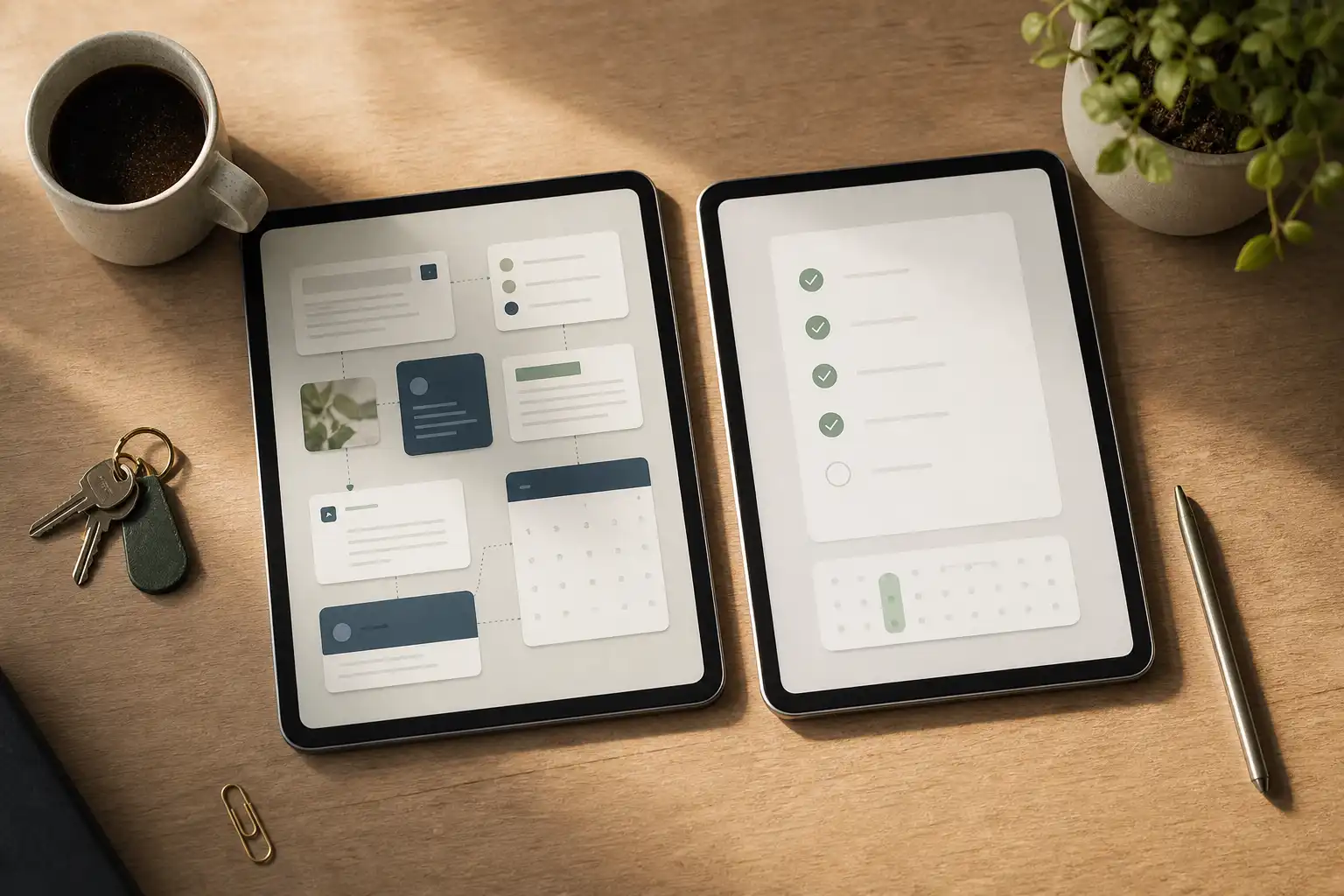
A recommendation-based tool can also reduce planning friction instead of becoming another planning project. OwnTime can hold a fast brain dump, suggest a short next action based on your context, and keep flexible routines such as laundry or breaks from disappearing just because they did not happen at a precise hour.
Know when self-experiments are not enough
Habits can help, but they do not replace care when sleep trouble is persistent or severe. You deserve a clearer answer than “try harder.”
Speak with a clinician if you regularly cannot fall or stay asleep, feel dangerously sleepy during the day, snore loudly, wake gasping, notice uncomfortable leg sensations at night, or see sleep problems affecting mood, safety, work, or relationships. If you take ADHD medication or other medicines that may affect sleep, bring your observations rather than changing the dose or timing on your own.
A two-week log makes that conversation far more concrete by turning “I am exhausted all the time” into details about sleep timing, quality, symptoms, caffeine, and what you have already tested. That gives a clinician better material to work with.
A useful goal for the next two weeks
Skip the goal of becoming a perfect sleeper by next Monday. Learn one useful fact about your energy instead.
Choose a wake-up range, test an earlier caffeine cutoff, and use one evening closing task for 14 days. Then keep low-energy tasks easy to find, so a poor night changes the plan rather than taking over the whole week.
Related articles