 OwnTime
Procrastination and Sleep: Stop the Energy Loop
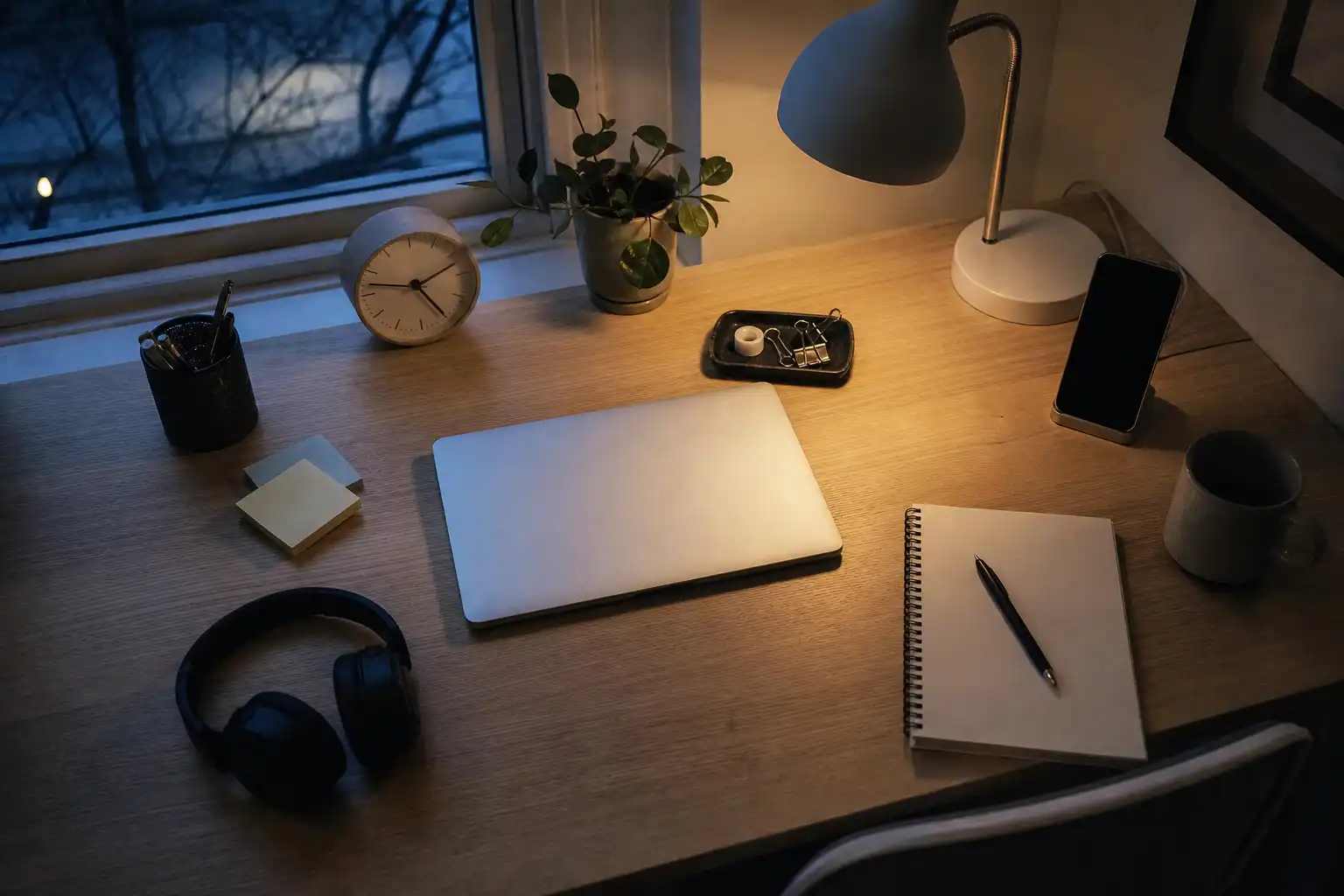
The loop starts before bedtime
At 4:40 p.m., the proposal you need to finish can sit behind three tabs while a low-stakes message suddenly feels like the most sensible use of the next 30 minutes. The pull is predictable.
Procrastination is delaying something you intend to do even when you expect the delay to cost you later, and it tends to appear when a task feels vague, unpleasant, oversized, or risky. That describes a behavior, not a personality diagnosis.
Low energy turns up the volume on those pressures because planning, resisting distractions, holding a next step in mind, and accepting an imperfect first pass all use mental control. A tired brain has less to spend. Unfinished work then follows you into the evening, where scrolling or one more episode can feel easier than sleep and leaves less capacity for tomorrow.
Breaking that loop starts with changing the next decision instead of demanding a late burst of discipline.
What sleep changes about task avoidance
Sleep loss does not create procrastination in a single night. It can make starting and steering work more expensive.
A meta-analysis of experimental sleep-restriction studies found negative effects across cognitive processing, including executive function and sustained attention (Lowe, Safati, and Hall, 2017). Those are the skills that help when a task needs a plan, a protected focus window, and a clear next move.
This is not a morality story about people who sleep well and people who do not. A delayed project can extend the workday, poor sleep can make that project harder to begin, and an overloaded week can cause both at once. Context matters.
Bedtime procrastination adds another link. A 2022 systematic review and meta-analysis defined it as voluntarily delaying bedtime when outside circumstances are not forcing the delay, and found associations with shorter sleep, poorer sleep quality, and more daytime fatigue (Kroese et al., 2022). The link is useful, not a verdict.
The practical move is straightforward. When energy drops, reduce the decisions and entry friction that make avoidance the easiest available option.
| What you notice | Better first adjustment |
|---|---|
| You reread the same document without moving it forward | Write one next action, such as “List four customer objections.” |
| You work late with little progress | Leave a restart note and choose a stopping time. |
| You delay bed while feeling wired and tired | Do a two-minute shutdown before leisure begins. |
| You keep picking tiny admin tasks | Set up a five-minute entry task for tomorrow. |
Use this as triage rather than diagnosis, because the same delayed task can come from low energy, missing information, or a scope problem that needs a decision. Self-scolding rarely fixes any of those.
Find the pattern over seven days
A seven-day note is enough to spot whether the issue shows up at 3:15 p.m., after meeting-heavy days, or in the last half-hour before bed. No dashboard required.
Capture four short observations when they happen.
- First avoided task — What were you about to do, and what did you do instead?
- Energy rating — Was this high-focus, workable, low, or fully drained?
- Late-day work — Did you stop with a clear restart point or a pile of open loops?
- Bedtime pivot — What happened in the final 30 minutes before you meant to sleep?
Keep each entry to one line. “Avoided proposal at 3:15; opened inbox; slept 45 minutes later than planned” gives you enough data.
By day 7, a pattern often becomes visible, such as deep work being assigned after six hours of calls or bedtime getting delayed only when work ends without closure. That is the signal to act on.
Close work before bedtime gets harder
Bedtime procrastination often appears after a day of obligations, when leisure is carrying the weight of unstructured time, social contact, relief from demands, or a sense of autonomy. That makes sense.
My view is clear. Build the off-ramp before 10:30 p.m. instead of planning to win an argument with yourself when your mental battery is nearly empty.
A shutdown sequence should be boring, brief, and easy to repeat.
- Write tomorrow’s first task. Make it concrete enough to begin without deciding what it means.
- Capture loose thoughts. Put reminders, worries, and ideas in one trusted place.
- Use a stopping cue. Plug in your laptop, make tea, or set out clothes for the morning.
- Choose finite leisure. Pick one activity with an endpoint rather than falling into an endless feed.
Four steps are plenty if they take five minutes. The aim is closure, not another evening project.
An implementation intention can also help because it links a predictable obstacle to a specific response. In two randomized trials with university students, a mental-contrasting and implementation-intention exercise reduced average bedtime procrastination compared with control activities (Bernecker and Job, 2020). Simple works.
Try an if-then plan that matches your actual evening.
I want enough sleep to feel steady tomorrow. If it is 10:30 p.m. and I want to keep scrolling, I will plug in my phone outside the bedroom and read for 10 minutes instead.
A 15-minute improvement that lasts is a better bet than an elaborate routine that disappears by Wednesday.
Put demanding work where your energy can carry it
The goal is not to turn every tired moment into a chore block. Some days need rest. The miss is assigning high-cognitive-load work to the exact hour when your brain has the least capacity to enter it.
| Energy state | Work that tends to fit |
|---|---|
| High | Writing, analysis, difficult decisions, and strategic planning |
| Medium | Editing, meetings, reviews, and preparation |
| Low | Filing, scheduling, simple replies, or preparing tomorrow’s first step |
| Drained | Food, water, movement, rest, clarification, or stopping work |
High-energy windows should go to work that moves a meaningful project forward, even if the window is only 25 minutes. Protect those blocks aggressively.
For days when meetings shred that block, use the pause-and-resume tactics in Deep Work: 7 Resets for Unpredictable Days. A restart system beats pretending every day will be clean.
Move the hard draft to your first workable hour. Before signing off, prepare the opening step so tomorrow does not begin with a blank page. Keep a short low-energy list ready for the late-afternoon dip.
Make the next task easier to choose
A giant task list creates a hidden tax because every spare 10 minutes requires a decision about what matters, what fits your energy, what is due, what can wait, and what has enough context. That tax grows when you are tired.
OwnTime is designed to reduce that choosing burden by surfacing a small set of recommended next tasks based on timing, importance, expected duration, flexibility, and the context you provide. You can capture tasks quickly, then turn an “I should do something” moment into a specific action.
That is automation worth using because it preserves your attention for judgment and creative work. Keep recommendations adjustable. Correct the system when it misses.
Add four low-friction options to your task system.
- A five-minute shutdown task for workdays
- A short evening reset away from screens
- A low-energy list for the afternoon slump
- A next-morning starter task for your most important project
You are removing dead ends from the day, which is a far better target than building a perfect schedule.
Keep sleep in perspective
One poor night can make concentration, inhibition, and task-switching feel more expensive, especially when the work is ambiguous or emotionally loaded. Simplify the day rather than writing it off.
Sleep is one lever among several. Procrastination can also come from fear of failure, unclear expectations, competing priorities, missing information, resentment, or a task too large to enter.
Persistent sleep trouble deserves more than a productivity workaround, particularly when it comes with loud snoring, breathing interruptions, severe daytime sleepiness, persistent anxiety, or low mood. A qualified clinician can help assess those symptoms. That is practical care.
Run a small seven-day reset
Treat the next week as an experiment with a narrow scope. Keep it tight.
- Choose one bedtime target that is plausible on most nights.
- Write one if-then response for the habit that delays bedtime most often.
- Set tomorrow’s first work action before each workday ends.
- Make a list of five tasks that fit low-energy periods.
- Protect one higher-energy work block, even if it lasts only 25 minutes.
- Record bedtime, the first avoided task, late-day energy, and your shutdown result.
- Review the notes after day 7 and change one thing.
On day 8, keep only the adjustment that moved your bedtime or helped you start work within the first 10 minutes, then test that one for another week.
Related articles