 OwnTime
Deep Work That Leaves Room for Your Life

Deep work should make life larger
For founders and freelancers, deep work earns its keep when it helps finish the work that moves the business forward before work quietly claims the evening, the weekend, and every spare gap between errands. That creep is real.
Deep work is sustained, distraction-free attention on a demanding task such as shaping product direction, writing a proposal, solving a technical problem, or building the plan that has been sitting there for two weeks. It is a method, not a lifestyle.
My view is simple: a focus practice that requires a silent house, a pristine calendar, and unusually high energy is too fragile to rely on. It works on paper. Most working lives do not.
Focus needs edges, not isolation
Useful deep work can coexist with clients, customers, collaborators, and personal commitments, even when interruptions are part of the job. It needs boundaries.
| Myth | What works better |
|---|---|
| “I need three or four untouched hours.” | A shorter, clearly defined session can produce meaningful progress when you protect it consistently. |
| “Deep work means ignoring everyone.” | Responsiveness works better in named windows, with clear expectations about when replies will arrive. |
| “More focus hours always win.” | Concentration has a cognitive cost, and recovery makes tomorrow's session more likely to happen. |
| “A schedule change ruins the day.” | Move the task, shrink it, or choose a smaller next step while keeping the practice intact. |
The aim is not to squeeze output from every minute. Make enough progress on high-value work that off-hours can feel like off-hours.
1. Choose one concrete outcome
A focus block needs a finish line because “work on marketing” or “make progress on the product” gives the brain too many doors to open at once. Specificity helps.
Before starting, write an outcome another person could recognize, such as “draft the landing-page structure,” “decide the four onboarding emails,” “fix the payment error and test checkout,” or “outline the investor update.” Keep it visible.
Define success before the predictable urge to check messages shows up.
2. Set a depth floor instead of an ideal schedule
A reliable 30-minute session usually beats a grand two-hour plan that appears only on unusually calm Tuesdays, especially when client work and life admin refuse to stay in their assigned lanes. Small is allowed.
Pick a minimum block that feels meaningful without becoming dramatic, then treat any extra time as a bonus when your energy and calendar cooperate. That is how the habit survives a messy week.
A freelancer might reserve 45 minutes for portfolio work before opening client channels, while a founder might use one block to make a product decision before the first meeting.
3. Put reactive work in a container
Messages, support requests, invoices, and calendar changes are legitimate work that keeps a business healthy, yet they will expand all day if they have no boundary. Give them one.
Create one or two named windows, perhaps a morning communication pass and a late-afternoon admin pass, then tell people what “responsive” means in practice. This is kinder than acting available every minute.
A 2023 study of computer-assisted protected time found that workers primarily used that time for focus; participants receiving the intervention reported better performance, job resources, and immersion while their overall work activity fell. Protected time can help because it reserves attention for work that matters. The tradeoff is intentional: some messages wait so the work behind the messages can move.
4. Leave a re-entry note before you stop
Returning after lunch, a meeting, a school pickup, or an energy dip is often harder than concentrating in the first place. Leave yourself a ramp back in.
Take two minutes to record three things: what you completed, the next physical or digital action, and anything unresolved that needs a later decision. Keep the note plain.
Unfinished work can continue pulling attention after a switch, which researchers describe as attention residue; research on task transitions found that people struggle to fully disengage from an unfinished task. The effect is documented here.
A re-entry note will not close every loop, but it gives the loop a parking spot rather than letting it run laps in your head.
5. Claim personal commitments before work expands
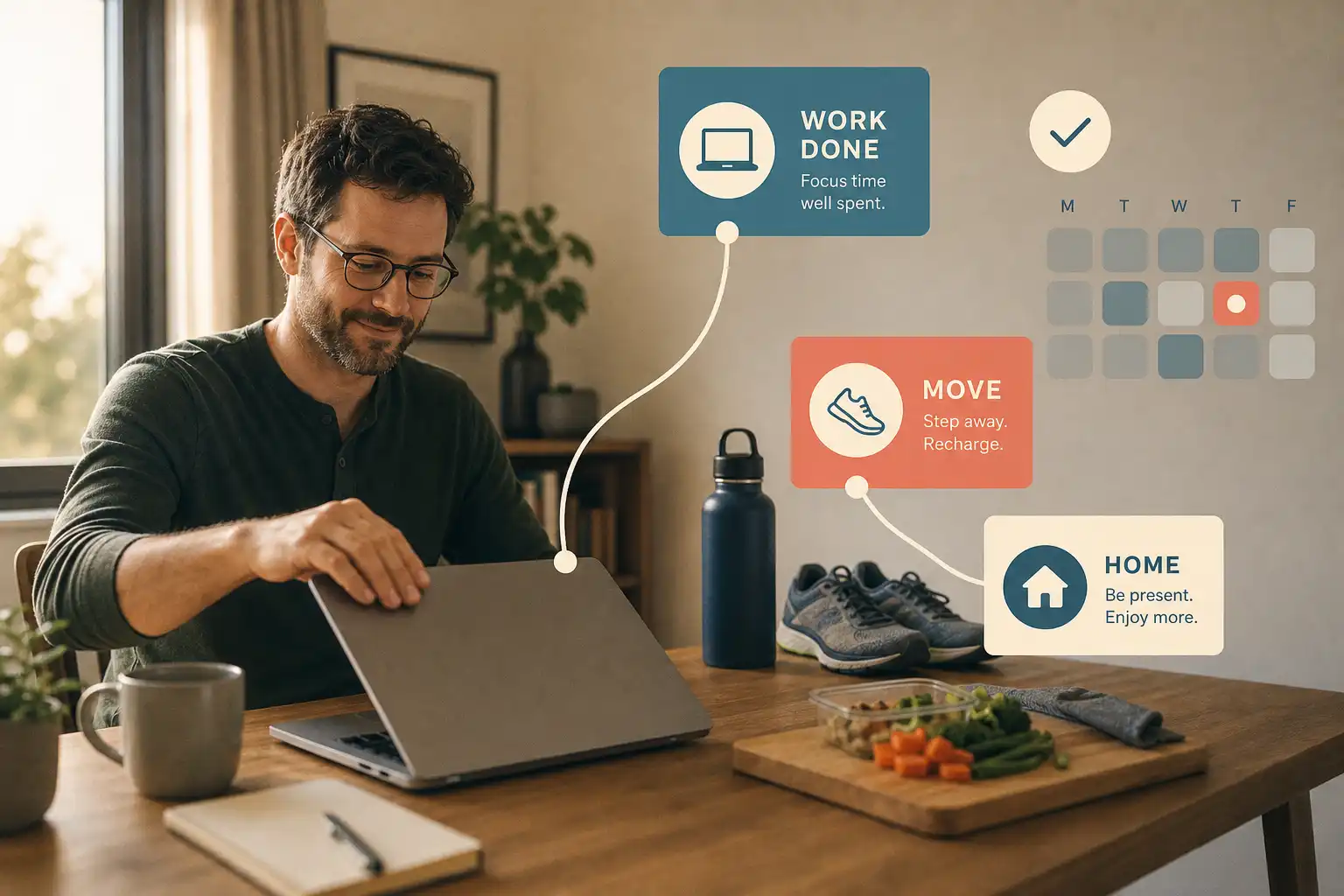
When revenue is on the line or a problem appears to have only one possible owner, work can make a persuasive case for taking every open hour. Personal time needs a calendar claim too.
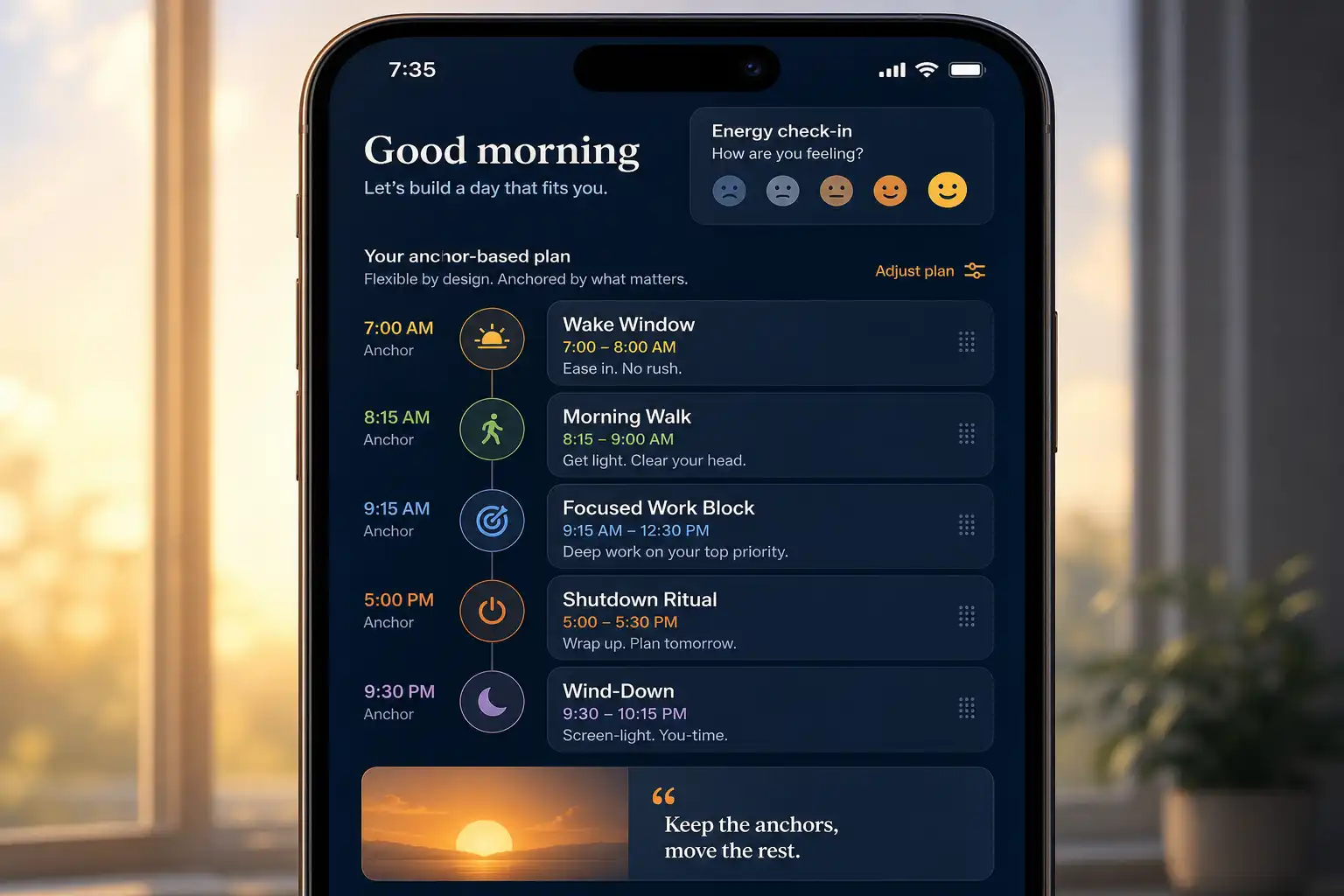
Schedule a few life anchors first, whether that means dinner, a workout, a walk, an appointment, an evening hobby, or a shutdown time. These are commitments, not prizes earned after finishing everything.
For practical ways to keep those boundaries flexible, remote-work habits that protect personal time can help.
A flawless balance is not the target; the useful move is stopping a vague backlog from automatically outranking the parts of life that make sustained work worth doing.
6. Match the task to the energy you have
Trying to write strategy after a draining sales call can lead to staring at a document, feeling guilty, and opening five unrelated browser tabs. That is not a character flaw.
Notice when your brain is strongest at synthesis, writing, design, or problem-solving, then reserve those periods for work that needs that kind of thinking. Use lower-energy stretches for review, scheduling, expense sorting, or straightforward follow-ups.
A poor night of sleep or a difficult meeting can change what is realistic without changing what still matters, so a flexible plan beats a rigid routine here every time.
7. Make the next choice cheaper
After a focus block, the next decision can be surprisingly expensive: reply to email, begin another project, run an errand, take a break, or scroll until the break stops helping. Friction wins often.
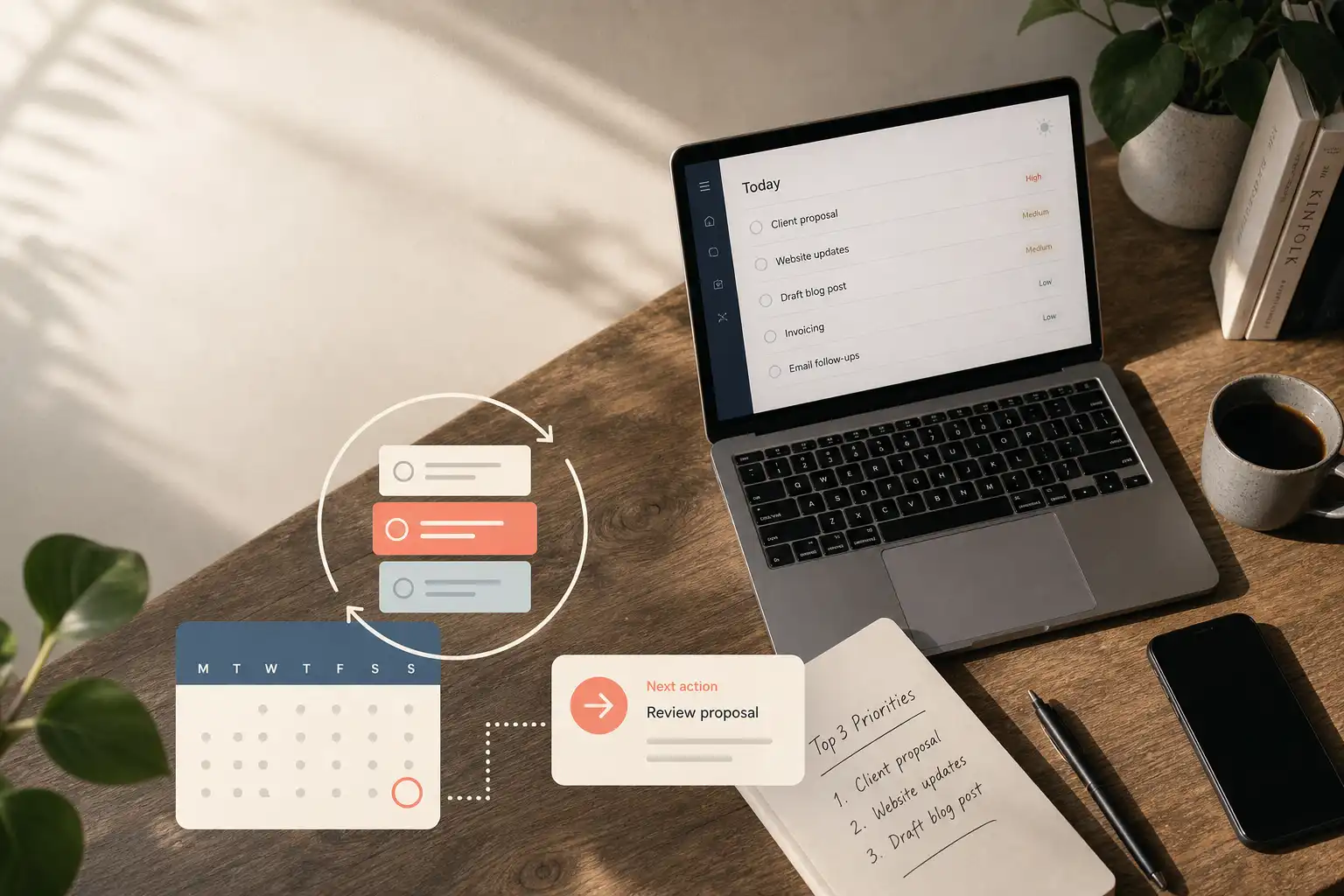
Keep work tasks, personal tasks, and time-sensitive commitments in one place where a reasonable next action is visible without re-evaluating an entire life list. Fewer decisions leave more attention for doing.
OwnTime is useful for this because it can suggest tasks from timing, effort, deadlines, and the context you provide instead of asking you to manually sort a giant backlog when your mental battery is low. A recommendation is an on-ramp, not an order. Change it when reality disagrees.
A focused week does not need to be packed
At the end of the week, focus-hour totals can be misleading because a disciplined-looking calendar may still leave important work fuzzy and personal time constantly interrupted. Ask what actually changed.
Did one or two difficult things get completed or materially advanced? Were there at least a few periods when work was fully off?
If those answers are sometimes yes, the system is probably doing its job. Deep work should support a business and a life that both remain possible to inhabit.
Related articles