 OwnTime
8 Workday Habits That Protect Evening Energy
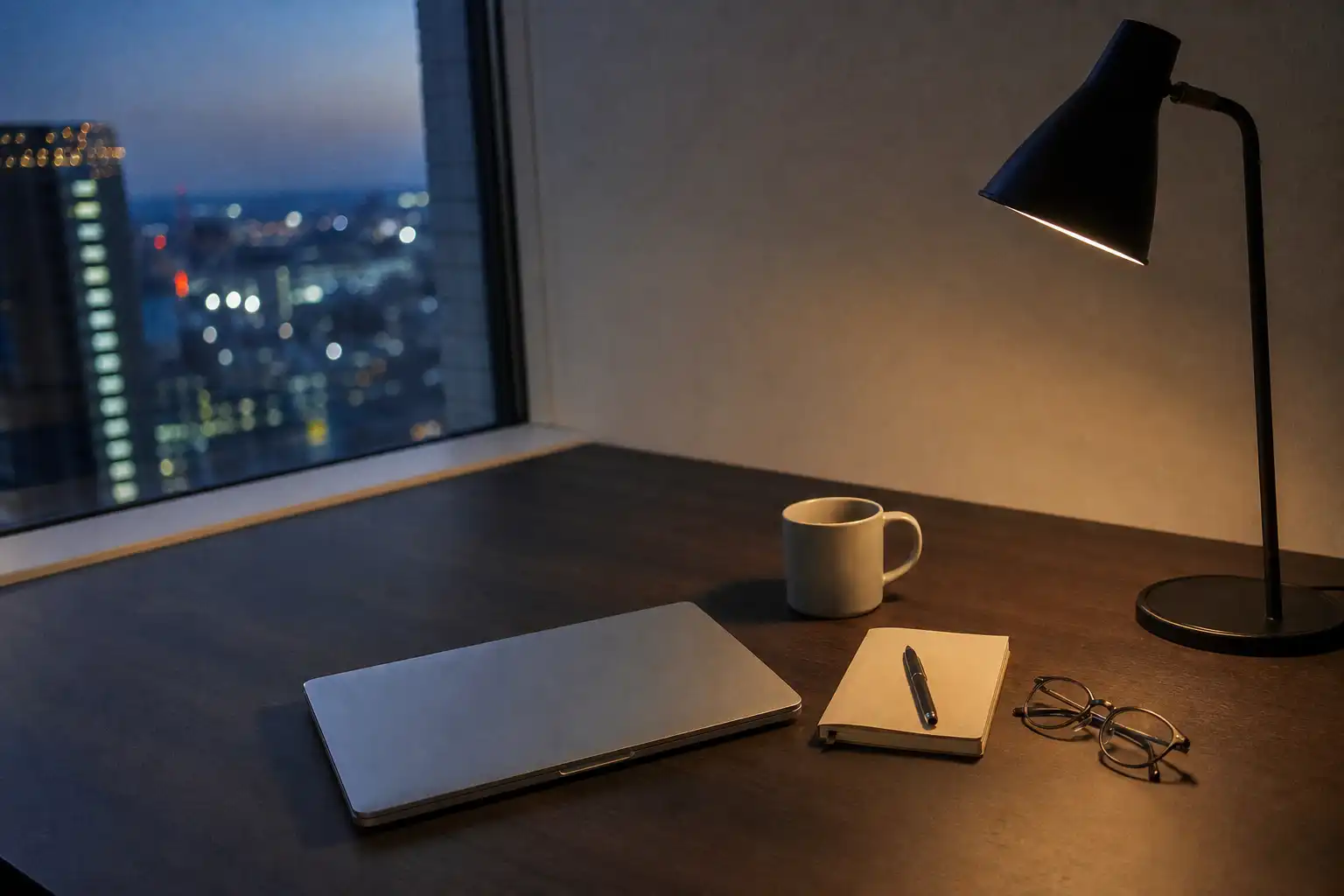
Your evening energy is often decided before 5 p.m.
If work regularly leaves you too drained to cook, exercise, see people, or rest properly, a grander morning routine is unlikely to solve the whole problem. The fix often starts during the workday. Small drains such as back-to-back meetings, skipped meals, and constant message checking can quietly consume the energy you meant to keep for later.
Long workweeks make that pattern harder to escape. In 2022, 29% of U.S. employees working 40 hours or fewer reported sleeping under seven hours a day, compared with 48% of employees working more than 60 hours, according to CDC data. This is bigger than willpower.
My view is straightforward: the best work habits should help you leave with fewer open loops, rather than help you cram even more into an already packed schedule. A calmer finish protects the hours after work. That tradeoff is worth making.
Find the leaks before changing everything
For 3 workdays, note each sharp energy dip in a phone note or on paper, including the time, what happened immediately before it, and what you did next. Keep each entry to one line. Patterns tend to show up quickly when the record is that simple.
You may spot a predictable trigger, such as meetings stacked without thinking time, lunch delayed until 2 p.m., message checks wedged between every task, or a difficult project left until your lowest-energy hour. These are workflow signals. Treat them as something to redesign, not evidence that you need to try harder.
1. Put judgment-heavy work in your best window
Reserve your clearest 45 to 90 minutes for work that needs decisions, writing, problem-solving, or a sensitive conversation, rather than automatically handing that time to inbox traffic. Protect it like a meeting when you can. The difference is often visible by the end of the day.
Your best window might be at 8:30 a.m., after your first planning block, or later once you have settled into work. Use the pattern you actually have. Copying someone else's preferred schedule is a dead end.
2. Add a buffer after demanding meetings
A 5-minute gap after an intense call gives you time to capture decisions, identify the next action, refill your water, or let your attention settle before someone else needs it. That gap is part of the work. It is not wasted calendar space.
When the calendar is packed wall to wall, protect one buffer first. Put it after the meeting that drains you most. A single reliable pause can stop one hard call from bleeding into the next four hours.
3. Break up long stretches of sitting
After you have been at the desk for a while, take a short walk, use the stairs, stretch near a window, or refill your water bottle from the farther kitchen. The goal is movement. It does not need to resemble a workout.
In a small crossover trial of sedentary adults, brief hourly walking bouts were linked with better self-reported energy and mood at the end of the day than uninterrupted sitting. The study compared movement breaks with prolonged sitting. Use that result as a reason to run a low-stakes experiment for a week.
4. Make lunch an actual reset
Spend at least part of lunch away from the task that has occupied your attention, whether that means eating in a different room, stepping outside for 10 minutes, or taking a short walk before you eat. Give your mind a channel change. It helps more than another distracted bite at the keyboard.
This matters most on crowded days, when working through lunch can leave you both mentally tired and behind on basic needs by mid-afternoon. You are protecting momentum. The work will still be there after 15 minutes.
5. Give messages a finish line
Choose one or two deliberate times to process messages, then set a clear cutoff near the end of the day for starting non-urgent conversations. This prevents every notification from becoming another thread your brain carries home. Most messages can wait until the next work block.
Your role, team expectations, and any on-call coverage still matter. Ask for clarity if response-time norms are vague. A stated expectation is far less tiring than constant guessing.
6. Attach one routine to an existing cue
Do not depend on remembering a new habit at the exact moment your attention is scattered; connect it to something that already happens in your day. For example, after your last morning meeting, take a 5-minute walk. When you close your lunch container, choose the afternoon priority.
This type of specific plan is called an implementation intention. A 2024 workplace study found that these plans can increase how often employees perform a desired work behavior, helping the behavior become more automatic over time. Read the study here.
The formula is intentionally plain: When X happens, I will do Y. Make the cue visible and the action small enough to survive a busy Tuesday.
7. Shift task types before the afternoon dip
Do not leave your hardest unfinished project for the final 30 minutes of the day, then use the resulting struggle as proof that you were unproductive. Save that lower-energy period for bounded work such as filing notes, preparing materials, confirming appointments, or outlining tomorrow's first move. Match the task to the fuel you have left.
This does not mean avoiding meaningful work. It means placing it when your judgment is stronger. Timing is a practical tool, not a personality test.
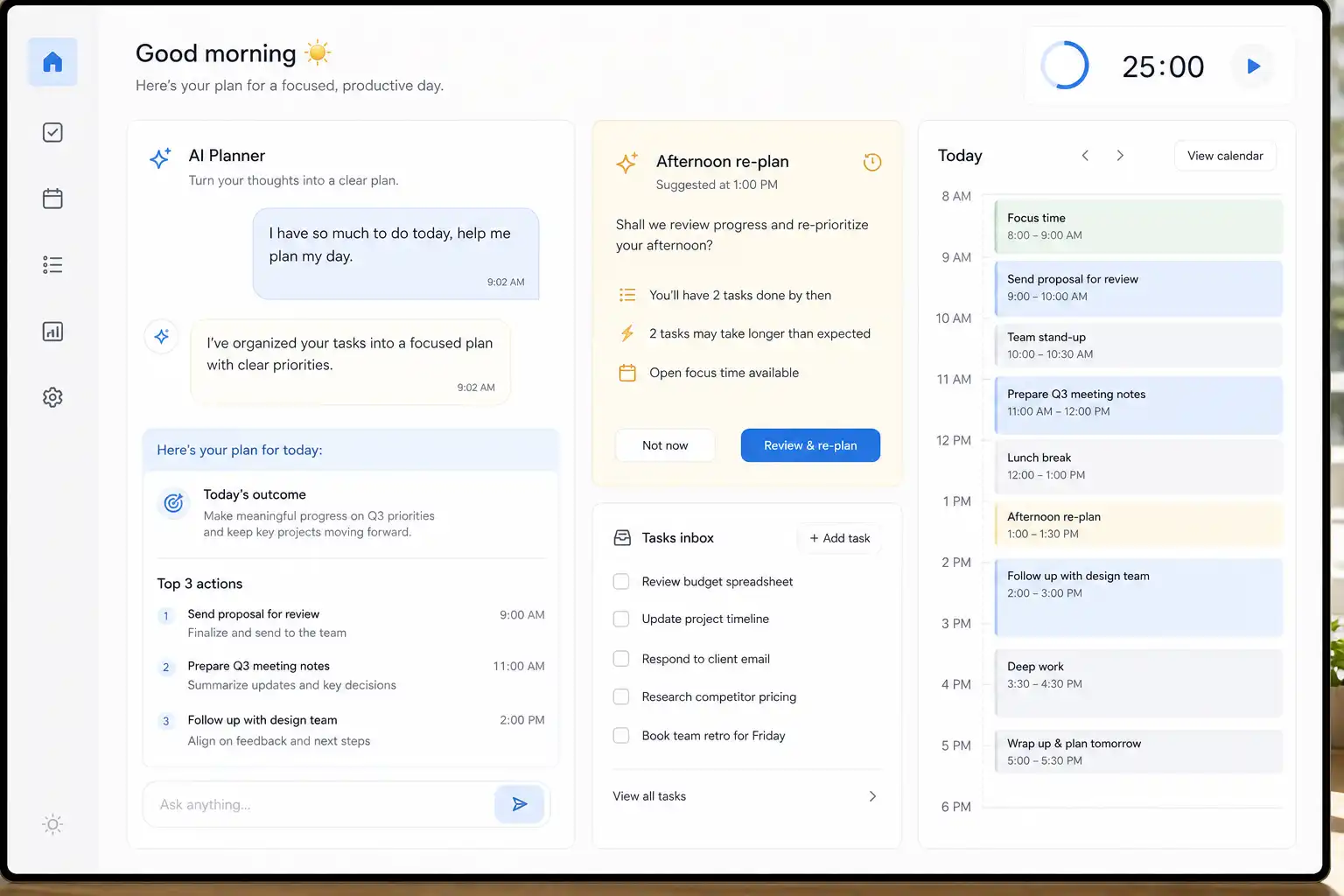
If you use OwnTime, keep flexible tasks available so its recommendations can surface a smaller, suitable task when concentration drops, instead of making you search a long backlog. That removes an unnecessary decision. Spare pockets of time become easier to use.
8. End with a two-minute restart note
Before leaving, write the first physical action for your most important task tomorrow, along with anything you need to open or bring before starting. “Draft the 3-bullet project update from the client notes” is much more useful than “Work on project update.” Specificity lowers the cost of restarting.
Then close the relevant tabs and put away loose papers. Leave a clear runway for tomorrow. A demanding workload may remain, but your brain no longer has to keep rehearsing where to begin.
Start with two habits, not all eight
A 2-week experiment beats a detailed plan that vanishes by Thursday. Pick one habit that supports your body and one that reduces mental spillover. Keep the test narrow enough to learn from it.
| If your biggest problem is... | Start with... |
|---|---|
| Feeling foggy in the afternoon | A brief movement break after one recurring meeting |
| Carrying work thoughts home | A restart note with only tomorrow's first action |
| Constant task-switching | One protected focus block and a message cutoff |
| Losing momentum after meetings | A 5-minute buffer after one draining call |
Do not grade yourself on perfect consistency. Track one useful outcome instead, such as whether starting the next task felt easier or whether you had more patience at 7 p.m.
Questions about workplace energy habits
How long does a work habit take to feel automatic?
There is no universal number of days because automaticity depends on how often the cue occurs, how simple the behavior is, and how much your workday changes. Repetition in a stable context matters more than speed. Aim for a routine you can recognize, not a streak you have to defend.
Can these habits work for shift workers?
Yes. Anchor the habit to an event in your shift, such as the first break, a handoff, or the final work block, rather than tying it to a clock time.
Shift work can bring more complicated sleep and fatigue concerns. If tiredness persists or affects safety, speak with a qualified healthcare professional and follow your workplace safety procedures.
Which habit helps when you are already exhausted?
Start with the 2-minute restart note. It reduces tomorrow's starting friction without asking much from you today.
Make it almost laughably small, such as writing one sentence about the first file to open at 9 a.m. Tomorrow will have enough decisions of its own. Give your future self one less.
Related articles