 OwnTime
How to Build a Sleep-and-Energy System
Stop treating low energy as a willpower problem
A six-hour night followed by a packed calendar produces low energy for a fairly obvious reason: your body is short on recovery, while your brain is still being asked to make dozens of decisions. Coffee usually just makes the depleted system louder.
The practical target is reliable sleep plus a daytime plan that fits the energy you actually have, rather than a fantasy routine built around cheerful 5 a.m. email. For most adults, the baseline is at least seven hours of regular sleep, according to this joint consensus statement from sleep researchers. Seven hours is a floor, not a trophy.
Step 1: Anchor your wake-up time
Pick a wake-up time you can keep on most days, then work backward to create enough opportunity for sleep, because a stable morning is generally easier to control than a bedtime you try to force while wide awake. Start there.
Try this for 14 days:
- Choose a wake time that fits your actual obligations rather than an aspirational version of yourself.
- Leave at least seven hours for sleep, and add more time if seven still leaves you dragging through the afternoon.
- Keep weekend drift modest instead of treating Saturday like an international flight.
- If you are awake in bed for a while, get up and do something quiet in low light until sleepiness returns.
This advice sounds basic because it is basic, and basic constraints still beat elaborate rituals that collapse by Wednesday. The hard part is repetition.
Step 2: Measure your actual energy pattern
For seven days, record bedtime, wake time, late-morning energy, mid-afternoon energy, caffeine timing, movement, and any obvious disruption such as illness or travel, without building a spreadsheet that looks like a clinical trial. Keep it crude.
A note or calendar is enough if it captures four fields:
- Sleep: approximate bedtime, wake time, and any repeated waking.
- Late morning: low, okay, or strong.
- Mid-afternoon: low, okay, or strong.
- Context: late caffeine, alcohol, hard exercise, work stress, illness, travel, or a very heavy meal.
You are looking for repeatable evidence, such as a 3 p.m. crash after short nights or restless sleep after late drinks, rather than blaming every rough day on blue light. Bodies are annoyingly variable.
Step 3: Remove the biggest nighttime friction
Sleep-hygiene checklists often turn into ceremonial busywork: buy special tea, order expensive glasses, download a meditation app, add a tracking gadget, then scroll in bed anyway. Fix the friction you can actually see.
Prioritize these five levers:
- Make the bedroom darker and quieter, then adjust the temperature if it feels uncomfortable. It does not need to look like a luxury hotel, but it should stop competing with sleep.
- Reduce bright light and stimulating screen use near bedtime. Phones are not evil; doomscrolling, work messages, news alerts, and bright light are a ridiculous prelude to rest.
- Move caffeine earlier if you suspect it affects you. Its effects can linger, so test a personal cutoff rather than copying somebody else's noon rule.
- Avoid going to bed overly full, hungry, or drunk. Alcohol can make you feel sleepy at first while disrupting sleep later in the night.
- Use a short shutdown routine. Ten minutes to set out clothes and capture tomorrow's loose tasks can stop the inbox from reopening in your head at 11:30 p.m.
Sleep hygiene is sensible prevention, though it does not reliably treat insomnia or every serious sleep problem. A 2015 review of the evidence found that individual sleep-hygiene habits are generally associated with sleep, while the direct effect of broad sleep-hygiene education is less certain. That distinction matters.
My view is blunt: most people do not need a more ornate bedtime ritual, complete with beige packaging and a subscription. They need fewer late obligations.
Step 4: Use movement to support sleep
Regular activity can improve daytime energy and sleep quality, but exercise should not become another punishment for being tired after a bad night. A short walk counts.
If you want one evidence-backed experiment, try resistance training two or three times a week with bodyweight, bands, or weights, provided the plan is realistic enough to survive a busy month. A systematic review and network meta-analysis of nonelderly adults found resistance training was the most effective evaluated nonpharmacological intervention for improving sleep quality. That does not make it the sole useful option.
Do not waste time hunting for one universally correct workout hour, because the relevant data is your own response after a few weeks. If a late hard session leaves you wired, move it earlier.
Step 5: Plan work for the energy you have
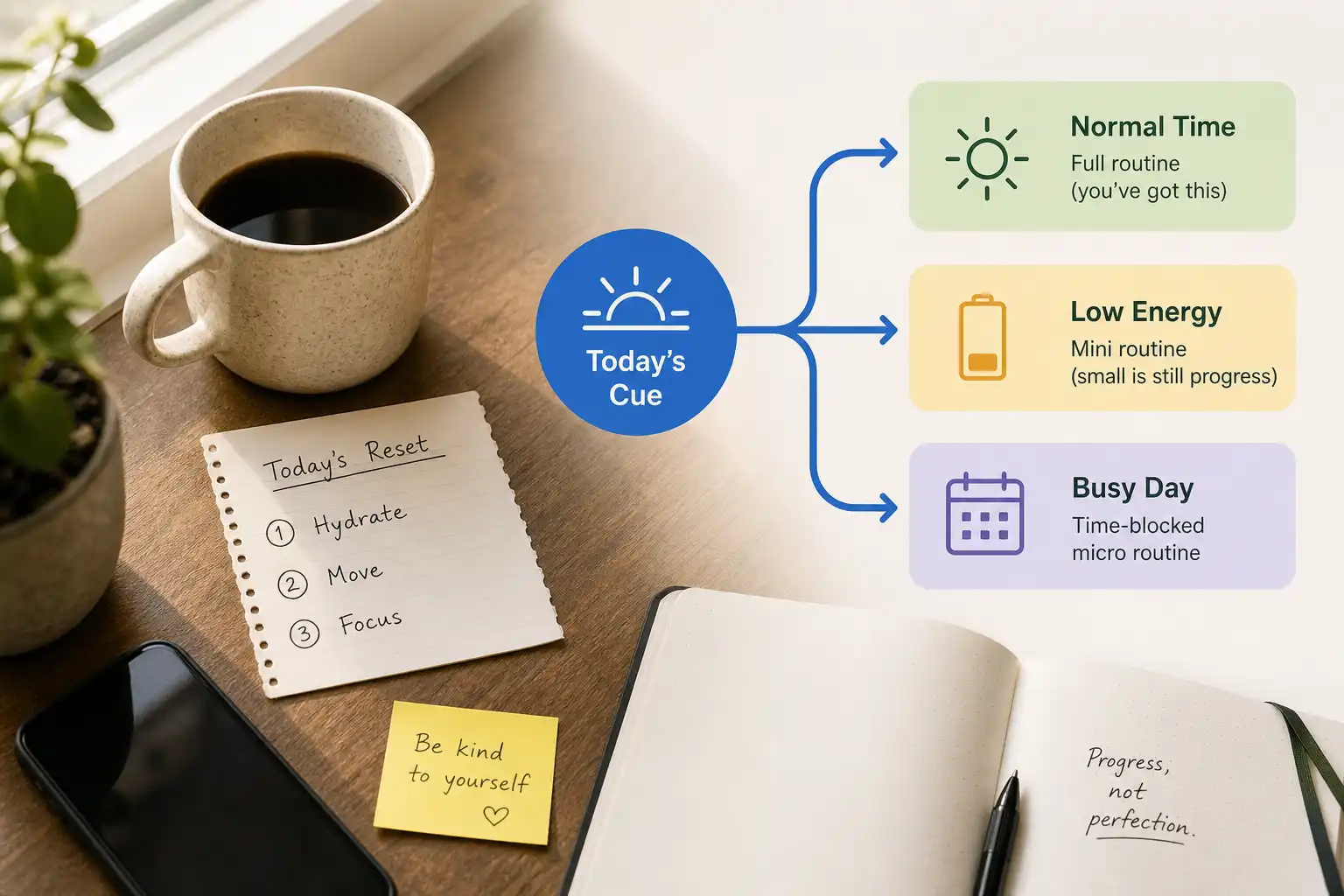
Better sleep helps, but even rested people do not get fourteen consecutive hours of peak executive function, and any task system that assumes otherwise is selling fiction. Plan for fluctuation.
| Energy lane | Use it for | Examples |
|---|---|---|
| High | Work requiring focus or judgment | Writing, difficult analysis |
| Medium | Important work with clear steps | Routine meetings, errands |
| Low | Small actions that keep life moving | Filing, simple replies |
Pick one high-energy task before the day gets crowded, then keep a visible low-energy list for the period when your brain starts bargaining for social media. That list must be genuinely easy.
An adaptive task app can beat a static master list when you are too mentally tired to scan 50 obligations and pretend choosing is free. OwnTime, for example, can capture tasks quickly and surface context-appropriate recommendations. Use it to reduce decisions.
But if every task needs five labels and a nightly review, the system has become the task. That is a bad trade.
Step 6: Test one change at a time
Choose one adjustment, hold it for 10 to 14 days, and compare your sleep and energy notes with the prior week, because changing caffeine, room temperature, supplements, exercise, screen habits, and bedtime all at once produces a great story with weak information. Run boring experiments.
Examples worth testing include:
- Keep the same wake time every day.
- Move your last caffeinated drink earlier.
- Add two resistance-training sessions each week.
- Put your phone outside the bedroom or across the room.
- Spend the final ten minutes before bed capturing tomorrow's tasks.
Keep a change only when it improves something you care about over multiple days, whether that means falling asleep faster, waking less often, avoiding wrecked afternoons, or feeling safer on the drive home. A habit is not virtuous because a wellness influencer sells it.
When sleep hygiene is not enough
If you get adequate sleep opportunity but still wake unrefreshed, struggle to stay awake during the day, snore loudly, gasp in sleep, have severe insomnia, or feel too tired to drive safely, talk with a qualified healthcare professional instead of trying to optimize your way out alone. This is not a productivity problem.
Persistent fatigue can come from sleep disorders, medication effects, mental-health concerns, or medical conditions, and no task plan can diagnose why your battery keeps dying. A task plan can still protect a rough day.
For the next 14 days, set a stable wake alarm, log late-afternoon energy, flag late caffeine, and test one change. You will have better evidence than another motivational speech.
Related articles
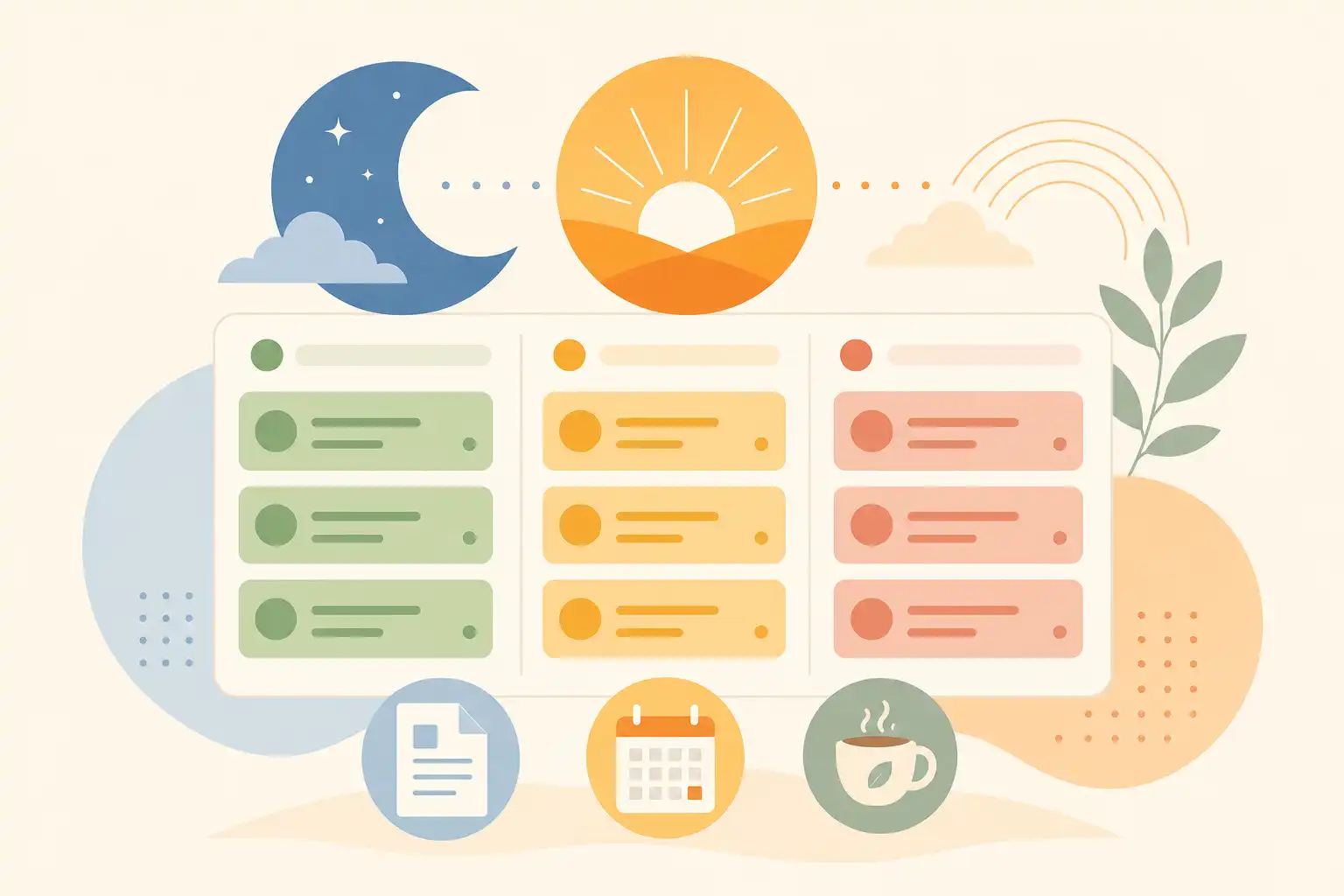
ADHD Sleepiness: An Executive-Function Triage System
ADHD Routines: 7 Systems That Resist Procrastination
Routines: Things vs Obsidian for ADHD Beginners
TickTick vs Google Tasks for Remote-Work Energy
Routines for Parents That Survive Real Life
ADHD Executive Function Routines: Science, Not Strict Schedules