 OwnTime
8 ADHD Habit Anchors for Unpredictable Days
Flexible anchors beat rigid schedules
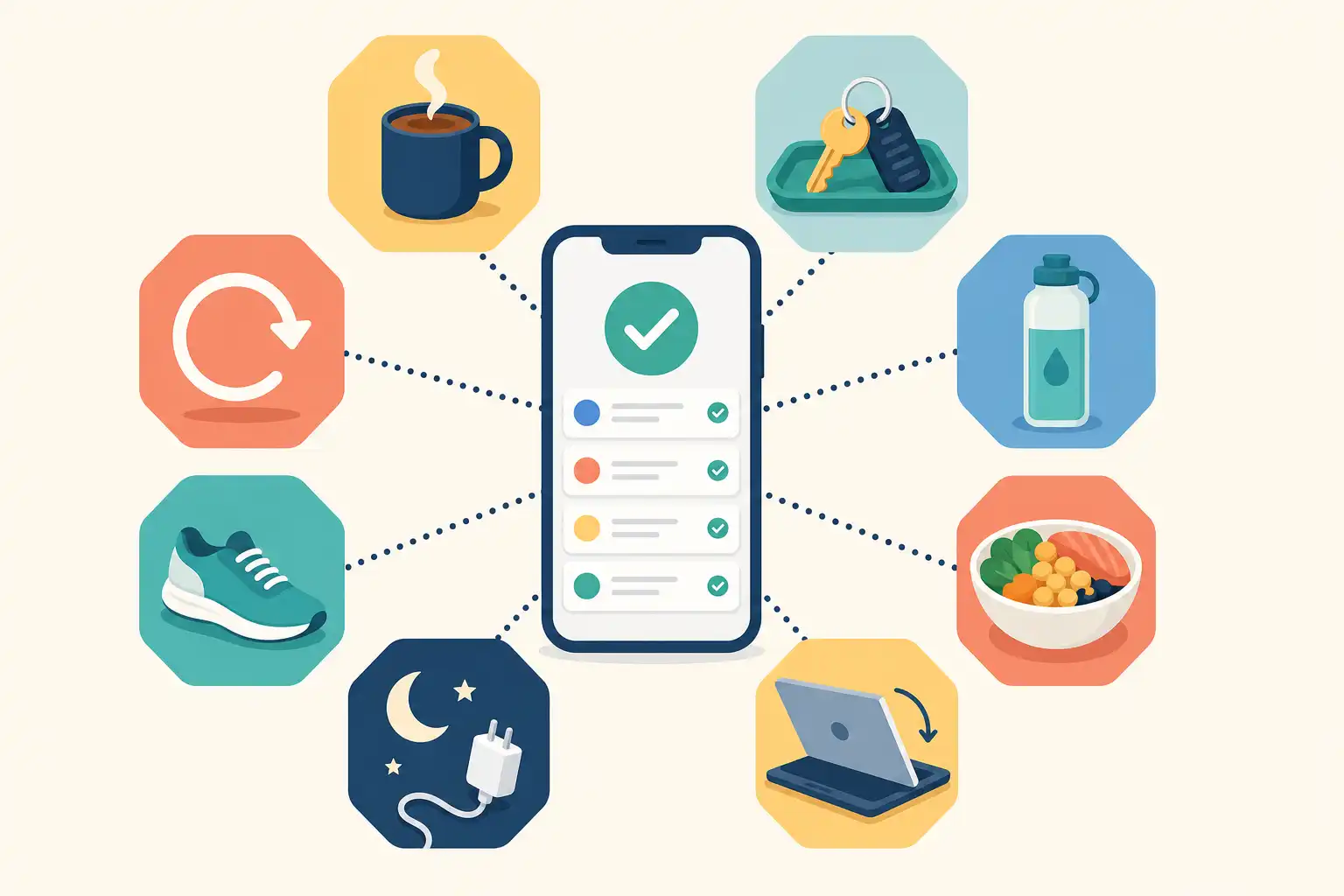
Attach a habit to opening your laptop or brushing your teeth, and it can survive the late call that wipes out a 7:00 a.m. plan. That relief matters. Personal-life habits can remove dozens of small decisions when work, clients, errands, and family plans keep changing shape.
For founders and freelancers with ADHD, the hard part is often the gap between knowing an action matters and remembering, starting, or returning to it at the right moment. That gap is real. Executive function supports initiation, sequencing, working memory, and attention switching, so a system that depends on perfect timing can fall apart after one unexpected deadline.
A habit that works only on an ideal Tuesday, when every call ends on time and no family plan shifts, fails the test for a useful habit. Build around events that already happen.
CHADD's practical guidance recommends choosing one change, defining it clearly, using an anchor, and beginning with micro-steps instead of attempting a total overhaul. Their habit-building guide is a useful reference.
Pick an anchor that matches the problem
Start with one personal-life habit that would remove noticeable friction over the next 7 days, rather than rebuilding your entire routine at once. Keep it concrete.
| If this is happening | Try this habit design | Example |
|---|---|---|
| Your schedule changes daily | Attach the action to a place or event rather than a time | Refill your water bottle after making coffee |
| You forget essentials when leaving | Put the cue where you cannot miss it | Check the launchpad before touching the doorknob |
| You avoid a task because it feels too large | Define a tiny finish line | Put away five items after dinner |
| You skip habits on draining days | Create a minimum version | Put on walking shoes and step outside for two minutes |
| One missed day becomes several weeks | Use a restart cue | Resume at the next evening tooth-brushing without making up missed days |
The strongest anchor is an event that already happens without a reminder and still happens on a messy day. It need not look impressive.
1. Use a first-contact cue
Pick one object or familiar spot that you encounter early, then assign it a single job. Give it exactly one job. A coffee maker, bathroom sink, bedside table, or kitchen counter can prompt an action before the day gets complicated.
Put daily vitamins beside the kettle, or set your water bottle beside the coffee beans so refilling it happens while the water boils. Keep the action tiny. A 60-second action is easier to repeat than a whole wellness ritual.
At first, assign one cue to one action, because five new promises attached to the coffee maker quickly turn a reminder into background noise.
2. Create a leaving-home launchpad
A launchpad is one visible place for the items that cause trouble when forgotten, such as keys, wallet, glasses, and a charger. It cuts down on frantic searching when attention is already split.
Put a tray, hook, shelf, or basket directly on your route out of the home. A drawer across the room will eventually become decorative storage. Before opening the door, touch the launchpad.
3. Keep one default rescue meal
When a workday runs long, eating can become difficult because every option appears to require planning, shopping, preparation, and cleanup. A default rescue meal ends that negotiation.
Choose food you tolerate and can make with few decisions, such as eggs and toast, yogurt with fruit and granola, prepared soup, or a freezer meal. Stock it intentionally. Keep the ingredients in one predictable area of the fridge or pantry so they are easy to spot.
Treat this meal as practical backup for the evenings when skipping dinner, grazing, or ordering food will leave you feeling worse.
4. Add a transition reset
Freelance work can bleed into personal time when there is no commute or office-closing ritual to mark the end of the day. The boundary is weak. Messages can keep pulling attention long after the last work task should be finished.
After your last work call, close the laptop, stand up, and do one physical action such as washing a cup, changing clothes, stepping outside, or starting a short playlist. Keep it under 5 minutes. This interrupts the automatic slide from work stress into evening avoidance.
If your hours move around, anchor this reset to closing the laptop for your longest break rather than to 5 p.m. Flexibility is the feature.
5. Give small chores a visible finish line
“Keep the apartment tidy” is an endless category. Define a boundary your brain can see, such as putting away five items after dinner or clearing only the kitchen counter before bed. Clear finish lines lower activation energy because the ending is visible before you start.
Use a physical container for unfinished decisions whenever possible, such as a basket for stray items or a designated donation bag. It gives loose objects somewhere to go without turning them into a vague pile.
6. Build an evening landing routine
Evenings are where reasonable plans often get renegotiated by fatigue. A landing routine can prepare tomorrow with almost no analysis.
After brushing your teeth, plug in your phone, place one needed item by the door, write one sentence about tomorrow's first personal priority, and put that note where you will see it. Tomorrow needs a breadcrumb. A note such as “book dentist appointment” or “take laundry downstairs” is enough.
If four actions feel like too much, begin by charging your phone in the same spot every night. Repetition beats ambition here.
7. Define the low-energy version
Every useful habit needs a version for days when you are ill, overloaded, travelling, or emotionally worn down. All-or-nothing takes over without one. The low-energy version keeps the cue connected to an action even when capacity is limited.
Set the minimum in advance: a workout can become 5 minutes of stretching; meal prep can mean moving tomorrow's lunch to the front of the fridge; an evening reset can be placing one item in the launchpad; kitchen cleanup can be washing one mug. The minimum should feel almost too easy.
Its job is to preserve the cue-action connection while your energy is low. Restarting then requires less effort.
8. Use a restart cue instead of catching up
Missing a habit is normal when life includes travel, deadlines, illness, and guests. That spiral is avoidable. The expensive part is often the story that follows, such as deciding you have fallen off and must restart properly on Monday.
Replace catch-up plans with a restart cue. If you miss an evening landing routine for four nights, do the smallest version the next time you brush your teeth. Do not compensate with an hour-long reset.
A lapse gives you useful information about the design, including whether the cue was hidden, the action was too large, the habit sat at the wrong point in the day, or notifications competed for attention. Adjust one part and try again.
Research on executive-function interventions for adults with ADHD suggests several approaches can help, while also finding meaningful risk-of-bias limitations in much of the available research. This systematic review supports a practical approach of testing supports and watching for improvements in daily functioning. Test, then adjust.
Make the next choice easier
Even a helpful routine can disappear when you are tired and facing a long backlog of possible tasks. Reduce the choices at the moment they matter.
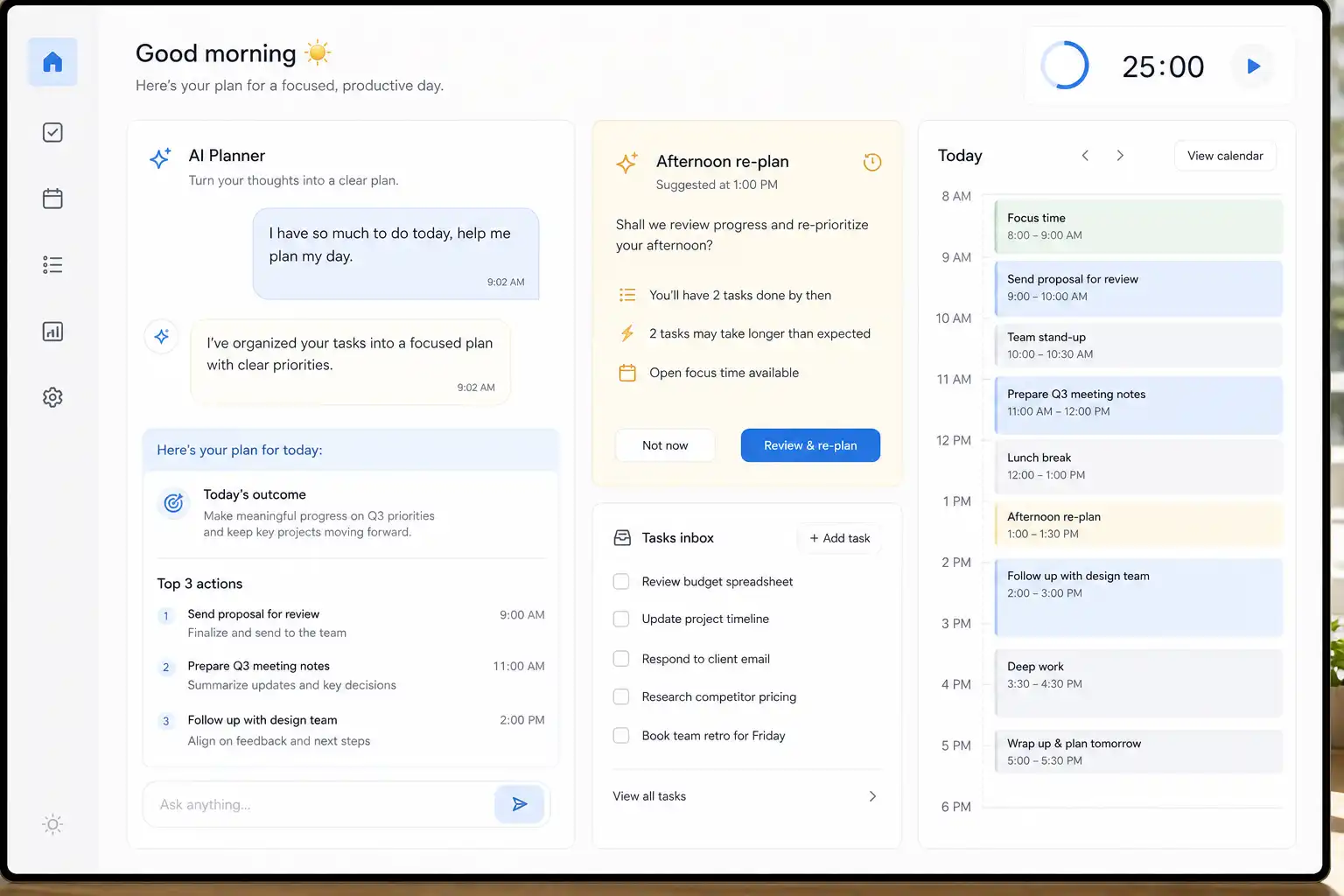
Keep a short personal-reset list with options such as refilling water, starting the dishwasher, setting out clothes, eating the rescue meal, taking a 5-minute walk, or paying one bill. OwnTime can surface relevant tasks and routines from your context, which reduces the energy spent scanning a backlog. That saves scanning time.
For a similar approach to routines that hold up during meetings and changing priorities, see ADHD work habits that survive interruptions.
For the next 7 days, make a small tally each time your chosen cue appears and each time you complete the action, then compare the two numbers. If the cue appears far more often than the action happens, move the cue or shrink the action.
Related articles