 OwnTime
ADHD Task Switching: A Science-First Daily System
Task switching is where the day often breaks
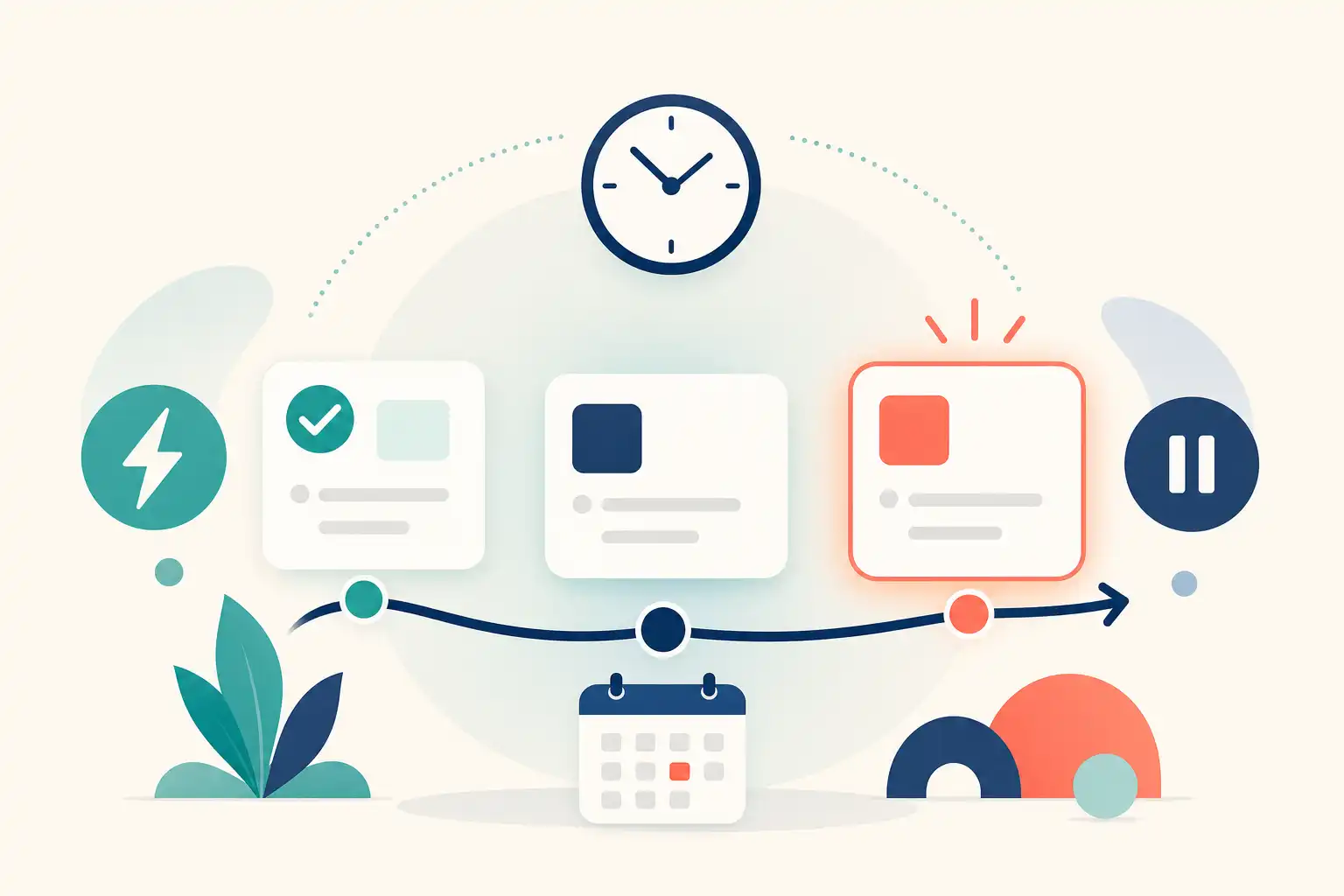
At 4:40 p.m., a meeting ends, a browser tab is still open, and three tasks all seem urgent enough to block each other. The handoff is expensive.
Checking one notification can suddenly feel more doable than choosing between the tasks in front of you, especially when the previous task left loose ends or used up your attention. This is not a planning failure.
A better question is, “What is the next reasonable action I can make obvious enough to begin?” That question changes the system you build.
Instead of relying on a heroic schedule that assumes steady energy and perfect follow-through, use a small external structure that carries routine decisions when your mental battery is low. The goal is re-entry.
What the research supports
Time-related difficulty is part of the picture for many adults with ADHD, though it does not show up in the same way for everyone. The evidence is nuanced.
A 2023 review of adult ADHD time-perception research found mixed results across studies of time estimation, time reproduction, and time management, partly because researchers used different methods and measures. The signal is useful rather than absolute.
In day-to-day work, a task can feel like a five-minute job and consume 40 minutes, while a deadline next Tuesday can feel abstract until it is suddenly immediate. That gap is not a character flaw.
Support also tends to work best when it goes beyond one app or one clever tactic. A 2024 meta-analysis of 23 studies with 3,835 participants found that pharmacological and psychosocial interventions both improved work-relevant outcomes compared with control groups, while noting meaningful differences between studies; CBT had the strongest psychosocial finding. Read the meta-analysis.
Tools can help with daily skills and decisions, but they do not replace care. If ADHD symptoms are consistently making work or home life harder, clinical support and workplace accommodations can belong in the plan.
Externalize the next decision
A giant task list asks your brain to remember, compare, estimate, prioritize, and initiate over and over again. That is a bad deal at 4:40 p.m.
Here is the opinion after watching too many systems collapse under their own setup: a productivity method that makes you rank 50 tasks every morning is productivity theater. Use the big list for storage.
Your system should answer four questions outside your head:
- What needs to be remembered? Capture it immediately.
- What has a hard time constraint? Put appointments and fixed deadlines somewhere they can shape the day.
- What can I do in this context? Filter tasks by available time, energy, location, and tools.
- What is the next physical action? Turn vague projects into something you can start without another planning session.
Choice will never disappear completely. Routine triage should.
Build a system for messy Tuesdays
Build for the Tuesday when a call runs long and lunch happens at 3 p.m., not for the calm Sunday night when every plan looks plausible. Keep the system small.
Capture first and organize later
When an idea, obligation, or worry appears, put it in one trusted inbox using the fewest taps available. Do not stop to decide whether it deserves a place there.
A capture can be incomplete. Its only job is to keep the task from becoming mental background noise.
Examples of useful captures:
- “Email Jordan about the contract revision”
- “Book dentist appointment”
- “Check whether the presentation has last quarter’s numbers”
- “Buy dishwasher tablets”
One inbox beats five beautiful lists that you forget to check. Keep moving.
Give every project a visible starting point
“Prepare quarterly review” is a project because it contains several hidden decisions, while “open the previous review” is an action you can take right now. Small actions reduce the startup tax.
| Vague task | Startable next action |
|---|---|
| Prepare quarterly review | Open the previous review and list four outcomes from this quarter. |
| Deal with taxes | Find the folder containing last year’s return. |
| Get healthier | Put tomorrow’s walking shoes by the door. |
| Fix the website | Write down the first broken page a customer would encounter. |
A good next action usually starts with a verb and needs no extra planning before you begin. Smaller is usually better.
Separate fixed-time work from flexible work
Meetings, appointments, medication reminders, and a call that must happen before 3 p.m. have hard edges, while laundry, reading, and most personal admin can move around. Treat those categories differently.
Putting every task on a calendar makes the plan brittle, and a brittle plan is easy to abandon after one interruption. Reserve exact time blocks for commitments that truly need them.
For flexible work, use three availability buckets: now, later today, and this week. That creates enough shape without pretending you can forecast every hour.
Keep a short list that fits the moment
The most important task on paper is sometimes impossible to begin in the time and energy you actually have. Context wins more often than ideal priority.
A useful shortlist can include four options:
- one focused desk task for a 45-minute gap
- one phone-friendly errand for waiting time
- one low-effort admin task for the post-meeting slump
- one restorative break after demanding work
This is not lowering the bar. It is setting a bar you can clear and returning to the harder work with less friction.
Match the move to the constraint
One tactic will not serve every state, and forcing the same routine through a late meeting, low energy, and a clear hour of focus usually backfires. Choose from a narrow menu instead.
| If this is happening | Try this next |
|---|---|
| You have 10 unplanned minutes | Do a task that takes under 10 minutes, or set up the first step of a larger task. |
| You have energy but no starting point | Pick the highest-impact task with a clearly written next action. |
| You just completed demanding work | Take a short break, then do one low-effort chore before asking for deep focus again. |
| You are late or overwhelmed | Identify the next deadline-sensitive action and defer the rest without renegotiating the entire day. |
| You keep avoiding one project | Make the next step smaller, more specific, or easier to start alongside a body double. |
| You are about to scroll by default | Ask for one recommended task that fits your current time and energy. |
Big lists are for storage. Shortlists are for action.
Use OwnTime as a next-action layer
OwnTime works best when it handles routine sorting while you keep control over what matters and what can wait. Start light rather than spending an afternoon configuring a system you will resent maintaining.
- Brain dump as things occur. Add work, home tasks, errands, routines, and notes instead of saving everything for a weekly organizing session.
- Import your calendar. Meetings and appointments establish the fixed constraints that flexible tasks need to work around.
- Write tasks in plain language. OwnTime can enrich a task with likely effort, timing, recurrence, and flexibility, so every thought does not become a form to complete.
- Check recommendations at transition points. After a meeting, lunch, commute, or completed task, review the small set that fits your available time and context.
- Set notification preferences in ordinary language. For example, ask for urgent work nudges only on weekdays or quick home tasks during spare evening time.
The recommendation system considers more than priority, including deadlines, task effort, recent completions, and the context you provide. It should feel like a useful prompt rather than a manager hovering over your shoulder.
When a suggestion misses, correct it and move on. A system earns trust by becoming more useful over time, not by demanding perfect data from day one.
Run a 60-second transition ritual
Loose endings invite distraction because your brain has to reconstruct where you were and decide what comes next at the same time. Make the handoff boring on purpose.
When you finish, pause, or get interrupted:
- Write one sentence about where to resume, such as “Draft is open; next, add the customer example.”
- Mark the task complete, paused, or rescheduled.
- Check your next recommendation or shortlist.
- Begin the first physical action before opening anything unrelated.
If the correct next move is rest, take the break on purpose. Intentional recovery is different from disappearing into an algorithmic feed.
Tune weekly instead of constantly
Once a week, scan for tasks that are stale, unclear, or no longer yours to do, then rewrite, defer, delegate, or delete them. Keep this review under 20 minutes.
Look for patterns without turning them into a verdict on your character. If creative work never happens after 3 p.m., stop assigning it to your 3 p.m. self.
You may find that errands only happen when paired with a commute, or that writing starts more easily after a 10-minute setup task. Build around the evidence you collect.
Before your next meeting ends, write the one sentence that tells you where to restart afterward. That small move gives the next version of you a much better handoff.
Related articles